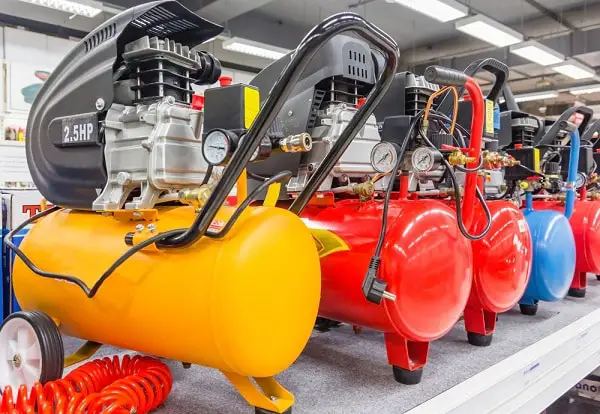
Working on a classic Mustang can be very satisfying as you strip away years of rust. As time marches forward, a stream of media eats into all that rust until you see metal underneath. But there’s only one piece of gear that makes that possible: your air compressor.
If you don’t have enough air volume, your nozzle is just for show. It’s not going to remove any rust. And you’re left with patchy coverage and a car that resembles a vehicle driven through a swamp.
And it’s not just about convenience. This is high use task: media blasting drinks compressed air as if it were water in a desert. A lot of homeowner purchase a typical shop compressor, attach their blaster and wonder what happened.
In mere seconds, the tank drains; the pressure plummets. Instead of stripping metal, the media simply pings off its surface. To get this job done require a dedicated setup.
Choosing The Right Air Compressor For Media Blasting
Understanding PSI Versus CFM
Pressure vs. Volume makes all the difference between success and failure. When looking at PSI, most folks thinks about numbers. Numbers on the gauge look big, so they think bigger is better.
Wrong. PSI is nothing but force. What you need to pay attention to are CFM or cubic feet per minute.
CFM measures volume. Abrasive blasting relies a lot on moving lots of air in order to move abrasive material well. The problem with this is when your tank goes empty, if your compressor can’t top off the tank as quickly as you’re blowing through it, the pressure will drop like a rock.
You’ll spend more time waiting for the tank to recharge instead of working. And yes, tank size are a secondary factor. The smaller your tank, the shorter its battery life.
Choosing the Right Tank Size
A small tank is like a short battery. When you begin blasting, it doesn’t take long for that small amount of energy to dissapears. Your demand must be smoothed out with a larger reservoir.
For example, if you have a twenty-gallon tank, you may get a shot of power but it will empty before you can complete one fender. If you have a sixty gallon (or greater) tank, there is a buffer which allow the compressor to cycle off/recover as you continue working. The more tank volume, the less you’ll be fighting the machine.
Selecting a Two-Stage Compressor
The more powerful the motor, the faster it fill the tank. For blowing air around, you want a good pump. For something like this that’s heavy duty, a two-stage compressor will be better.
It compresses the air not once but twice, meaning it can produces higher pressure, and also move more air. The blasting nozzle may not be able to keep up on a single stage unit. Check the CFM rating of the unit at your working pressure.
If it’s rated as having fifteen CFM at ninety PSI, look at fine print. Many ratings are given at zero PSI. That means nothing for blasting.
What you want is the number at operating pressure. Air demand vary with nozzle selection. How much air you use depend on the size of the orifice.
Matching Nozzles to Air Demand
Bigger nozzles offer greater coverage area and throw. They run out of air twice as quickly than. Smaller nozzles conserve air while taking eternity to blanket a door panel.
Speed versus endurance, pick your poison. Don’t pair a big nozzle with a small compressor. You’ll make everyone crazy.
Gas Versus Electric Power Sources
Capacity and convenience matter. For large volumes of air delivered per minute (CFM), gas compressor units works well without requiring a huge electrical circuit. They are powerful and portable.
Electric units are garage friendly, quiet and easily maintained. They need good power supply; typically a twenty-four-volt circuit. Consider the infrastructure of your shop.
Depending on how much heavy power you have or don’t have, gas may be your only option. Consistent uninterrupted airflow are the aim. An ounce of prevention is worth a pound of headache.
Safety and Setup Tips
Make sure your hoses are wide and short. Narrow, long hoses severely block air flow, and they form a bottleneck which stop all your compressor efforts. Connect directly where practical.
Test for leaks before operation. Hissing fittings is a waste of valuable air. Tie down the car body.
Mask what you don’t wish to be blasted. Wear proper PPE. Don’t skimp on safety; that abrasive dust will hurt you.
And finally the right compressor makes blasting easy to do rather than a chore. Rust dissapears and the media moves because of it. When you are finished, you are proud of how well you prepared your vehicle.
The bare metal shines and is ready for primer and paint. The compressor is the unsung hero that restores your car. Select carefully and use it with care.
Your car will appreciate it.