
DISCLOSURE: This post may contain affiliate links, meaning when you click the links and make a purchase, I receive a commission. As an Amazon Associate I earn from qualifying purchases.
There is particular frustration when you have to drag an air compressor up a ladder or carry it from job site to job site in a tight space. For years cordless nailers addressed the weight of batteries, yet created another headache. You still needed a separate compressor and a hose.
And that required either a hose or a separate compressor (or the hassle of a dying 12 volt battery or searching for grounded outlet). It was a clunky solution to wanting to be untethered. This category has been introduced by Ryobi, and their line are called Airwave.
The idea is to take the whole compressor out of the mix completely. In theory, it’s an elegant concept. You have a small reservoir of air onboard the tool.
It fills up from any conventional air source. And when you squeeze the trigger it releases it mechanicaly. There is no compressor.
There is no hose. It is just a self-breathing battery powered nailer. Sounds like ultimate in cordless convenience.
So how does it hold up? Run it through a string of trim jobs. How does the onboard air system holds up?
Can it handle actual work? Does it get you home or strand you halfway through? These answers are not simple.
It’s not a perfect tool. But it’s a great tool for a particular kind of user and has a precise solution to a very particular problem. Knowing where it works best (and where it doesn’t) will help you determine whether it fits into your toolbox.
Reviewing The Ryobi Airwave Cordless Nailer System
Understanding the Ryobi Airwave System
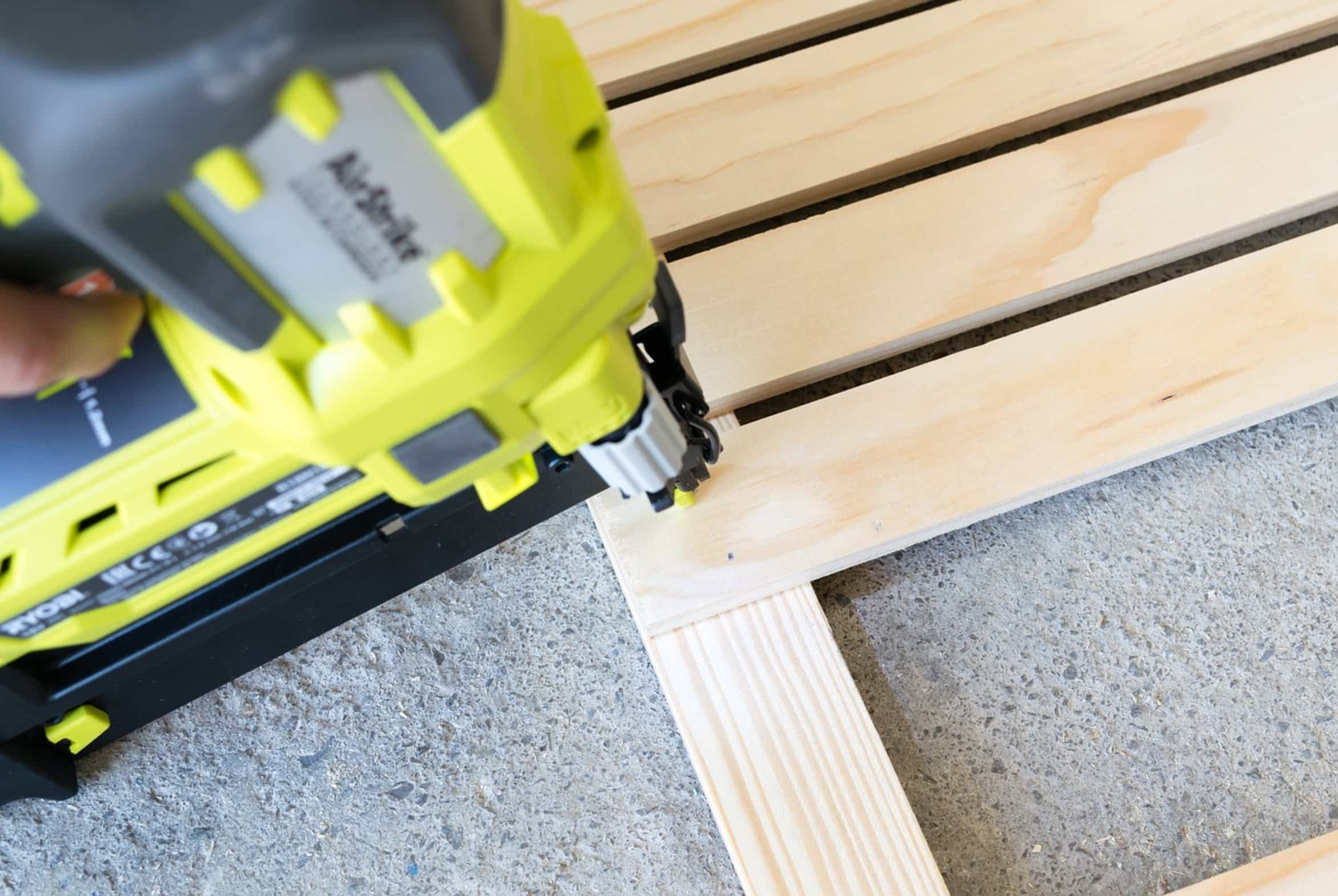
First up, it have good weight distribution. It’s balanced. It’s not top heavy.
Because the onboard air reservoir is closer to the base of the magazine. That keep the center of gravity low. When you are holding the tool at odd angles to fit trim into a corner of your ceiling that matter.
Weight Distribution and Balance
A standard cordless brad nailer has a large 18 volt battery in its back, near the rear handle. That makes for feeling like you’re holding a hammer and attempting to thread a needle. With the Airwave, it’s more like holding a traditional pneumatic tool.
Only without the hose. That means a change to how you work. You can no longer just flip a switch and go.
Now you have to use a compressor or some other high volume air source to top off that tool before starting work. The Ryobi comes with a quick connect adapter and it’s fast. From a typical shop compressor it will take you maybe thirty seconds to fill the reservoir.
From there, the tool will hold up to around fifty or sixty shots depending on depth setting. That’s more than enough for most trim runs. The key is to think in batches instead of an endless stream.
This is where people screw up. They expect to have infinite air. And they don’t.
Workflow Changes and Air Capacity
Performance is how it drives. It drive surprisingly well.
There is no spinning motor at impact. A mechanical piston is driven with air pressure when the trigger is pulled. Pull is crisp and light.
Nails go down clean and don’t split the wood. To achieve this you have to set the depth dial correctly. I’ve nailed both pine and oak trim with equal results.
Driving Performance and Wood Quality

It is identical to if you had hooked up a compressor and used an air nailer. The nails sink cleanly without splitting the wood, provided you adjust the depth dial correctly. You don’t have to worry about your compressor PSI spiking and suddenly driving the nails deeper than you want them to be.
It’s a self contained system. The battery life has never been an issue for most people. It use the same 18 volt ONE+ battery as all their tools.
Since it only runs to compress air and fill the reservoir instead of running continuously to drive each nail, battery use is minimal while you are actualy nailing. With a full charge you could easily get through a whole day of trim work without needing a recharge. The limiting factor here isn’t power but rather air.
Before your battery dies youll be well past running out of air. That’s a nice problem to have because you don’t have to monitor a fuel gauge. You can just get on with doing what you’re there to do.
Battery Life and Efficiency
The air supply is something you get used to running. If you’ve ever filled your scuba tank at a dive shop, this system is like that. The tool has an onboard reservoir and a motor that runs to compress air back into it.
You’ll hear a quiet hiss. It is subtle, but you will hear it. That means the reservoir are refilling itself.
Wait or continue working with what air you have. After an hour, it will become second nature. Pause and let it top off.
Resume operation when full. Keep operating with air remaining. Either way, it’s a workflow change and it won’t break it.
Refilling Workflow and Noise
Depending on which side of the fence you fall on, some will enjoy the autonomy, while others will miss the set it and forget it nature of a hose. Not all tools are for all people. For example, if you are framing houses go buy a compressor and a pneumatic nailer.
Because that tool just doesn’t do it. It’s too slow. The air capacity isn’t high enough.
However, if you’re doing furniture assembly, finish carpentry or anything else that requires some mobility then this is a game changer. What it does do is take away the single largest pain point of using cordless nailers. It depends on a compressor.
Ideal Use Cases and Limitations
It has the feel of a pneumatic but the freedom of being cordless. That’s a rare combination. It takes an annoying workaround and makes it a real solution.
The hose stays in the shop. The work goes where it needs to be done.