Deflation: Pulling off to change a flat only to discover your pump’s not up to the task of getting the tire back to full. Now you’re stuck on the side of the road with a bunch of car around you, a bike that weigh more than you’d planned, and it’s just as well since you were about to do a long ride or head out on a daily commute. That’s what happens to a lot of rider.
And it can be avoided if you replace your floor pump with a mini-air-compressor. Small enough to fit in a saddle bag, these portable pumps gets tires back up in no time so a troublesome stop becomes a brief one. It is reassuringly fast and compact, making it ideal for keeping bike running.
Complete Air Compressor Guide for Bicycle Tires
Why Mini Air Compressors Beat Floor Pumps
Using Presta Valves with Compressors
Maintenance should of also be easy and effective if you have proper setup. The problem: Cyclists switching from car tires to road bikes face one obstacle, Presta valves. While these narrow valves is common on more expensive bicycles (they accommodate narrower tires at higher pressures) they’re a departure from the wide Schrader valves you find on mountain bike or in your car.
Just try sticking a compressor nozzle onto a Presta valve and see what happens. It won’t fit. The nozzle’s too big and the valve itself’s too small.
If you force it, you’ll bend the valve stem and ruin your wheel. What you need is some kind of bridge from system to system. That’s where the Presta adapter comes into play.
For about 50 cents (less than a dollar), you get this small bit of metal with a screw-on end that attaches to the Presta valve. When screwed on, the Presta adapter turn the Presta valve into a Schrader-style valve. Meaning it will accept any standard compressor nozzle without issue.
It is a simple mechanical fix to solve a compatibility issue. The adapters are typicaly made from either steel or brass. They’re tough enough for everyday use.
Because they weigh next to nothing and don’t take up much room, I’d recommend keeping some in your saddle bag. It is a small investment with a big payoff in terms of versatility. But not all bike air compressors are created equally.
Choosing the Right Portable Compressor
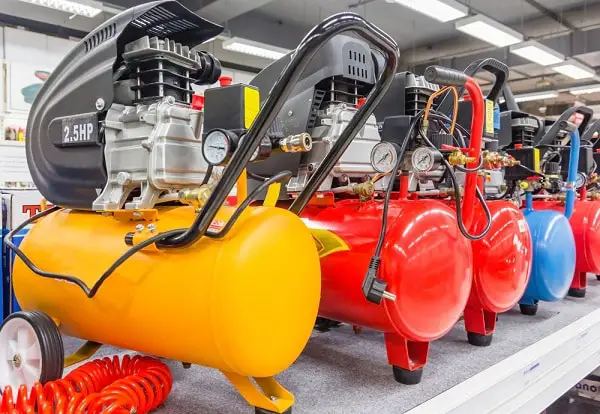
Portability is a question of the size and shape. The ones commonly found in home garages is known as pancake compressors. They have a decent tank size and they’re low profile.
However, they’re also big and heavy and they need to be plug into an electrical outlet, not something suitable for roadside repairs. What you want if you ride bikes is a portable unit; sometimes referred to as a small compressor or a tire inflator. Units made by brands like Porter Cable and Campbell Hausfeld can fits in a large backpack or even your trunk.
These units are powered either by a 12V socket or by a car cigarette lighter and are perfect for those emergency repairs when you’re way out there. The better compressors also has accurate gauges for pumping up pressure. Most cheaper versions don’t have a gauge at all, or they’re unreliable and will pump your tire past the correct amount, causing the tire to possibly explode.
Understanding PSI and Pressure Gauges

For most road tires, you need something in the range of 80-120 PSI. That’s not much room for error. If you have an analog dial, even on a cheap compressor, it might take a while to respond and may not actualy register correctly.
A digital read out is much better since it displays actual live air pressure. Better yet, some high end compressors such as the one by Black+Decker let you set a desired PSI. Once it reaches the proper pressure, the compressor turn off, saving you from over filling and having to guess.
Compressor Noise and Noise Levels
The biggest drawback to an air compressor is that it is noisy. While a traditional hand pump is silent and won’t attract attention, an air compressor can be loud enough to wake neighbors or disturb people on the street. Speed comes at the cost of silence.
If you’re livig in an apartment with lots of people and value your peaceful mornings, set your expectations accordingly. The convenience is well worth the extra noise. You get what you pay for in decibels.
Maintaining Your Portable Air Compressor
To keep things running smoothly you’ll want to maintain your compressor. While there isn’t much maintenance, taking care of it helps it last longer. For bikes, an oil-free compressor work best due to its cleanliness and lack of maintenance.
Just be sure to periodically check the air filter; it can get dirty and block airflow which leads to overheating of the motor. Also store it somewhere dry since the metal parts can start to rust. Lastly, if you do tend to coil up the hose, make sure to inspect it occasionally for any signs of wear or cracking.
Nothing good comes from a bursting hose while you’re stranded roadside. If you take care of the tool it’ll take care of you when you realy need it. Freedom comes from being able to carry a small compressor in your kit with a Presta adapter.
No more dragging around that massive hand pump. You’re not stuck at the gas station. A flat can be fixed in seconds.
You have the ability to repair a soft tire or slow leak during a long ride. That’s pretty handy when out on a long one. Because the adapter makes it compatible, it goes from an issue to a non-issue.
And because it’s easy to use, it takes seconds instead of becoming a chore. They make for staying on track. Your bike stays fast.
You stay on the road.