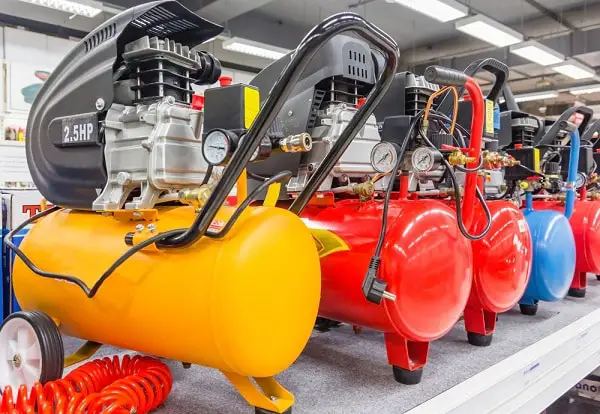
In most shops, you know when an air compressor is running. That’s your cue that something is getting done. Whether it’s filling up tires or helping you hang some drywall, the air compressor provide air to help those tasks get done.
However, few users realy know what is going on inside. Press a switch, hear a click, and cross your fingers. The more you understand about the machine, the better you operate machine.
The experience transforms from blind faith to active management. Knowing how the tank, valve, and piston works together makes you less likely to guess what happened when your compressor ran hot, or why your spray gun stuttered. You begin to view air compressor as a reliable source of pressure.
Understanding Air Compressor Parts and Operation
The Piston and Compression Cycle
And the piston is the muscle. Inside this cylinder, there’s a piston that gets moved up and down by a crankshaft that spin because of an electric motor. Think of it as like a bicycle pump; only it happens much faster and with greater force.
The piston pulling upward sucks air from outside in through intake valve to create a vacuum. Then it squashes the air into a smaller space when it pushes downward. That compression is what produces your power.
How fast does it cycle? That’s how much capacity a given compressor has. Heavy duty unit cycle quickly to fill up a big tank.
Oil Free vs Oiled Compressors
Hobbyist compressors cycle at a slow rate. It’s all about friction. Some are oil-free, while others are oiled.
Those that is oiled have less wear on the components since oil coats them and carries off heat too. They also last longer. And yes, they can be more difficultly to clean.
Oil-free ones run hot and don’t last as long (under heavy use).
Valve Function and Check Valves
This system controls traffic with valves. Valves determine when air go into the cylinder and when it comes out.
If they weren’t there the piston would simply shove air back out of which it entered. When the piston is going up, the intake valve opens and allows new air into the cylinder. As the piston moves down, the discharge valve open and pushes the compressed air out.
Constant stress on these component can result in leakage and sticking due to heat, moisture and carbon build up. One common reason a compressor struggle to reach cut-off pressure is a leaking valve. The check valve is especially important.
That’s the one that goes between the storage tank and the compressor head. The purpose of that check valve is to allow air to flow in but not out of the tank. When you start your pump, the tank must never be a part of the compression cycle.
Doing so will put huge amounts of stress on both the piston and the motor, which lead to early failure. This is a very small part that costs little money and saves the whole machine. So it’s a good idea to check it when you do your maintenence.
Storage Tank Purpose and Sizing

The tank is where compressed air goes when it’s made. A tank serves a few purposes. First, it stores potential energy for immediate demand.
An impact wrench, for example, has to have an instant surge of air that the piston can’t give all at once. The tank evens out those highs and lows. Second, the tank gives the compressor time off.
Because the tank store air, the motor doesn’t have to run all the time, which saves you money on energy and reduces noise. Certain applications also call for different sized tanks. If you are just doing small detail work like nailing in trim and the like that doesn’t require much air, a nice pancake compressor with a 6 gallon tank will do fine.
But if you want to do some spraying, where you need constant flow at high volumes, it’s not going to cut it. You’ll want a bigger tank (either horizontal or vertical), maybe 30 gallons minimum. That will dictate your runtime before the motor kicks back on.
That makes all the difference when you’re trying to get a smooth finish versus fighting the restart process every couple seconds.
Pressure Switch and Moisture Control
Now let’s finish up with pressure. Pressure is regulated by a pressure switch which turns the motor on/off to maintain the pressure in the tank.
When the pressure hits a high limit, it will shut the motor down. When the pressure gets to a lower limit, it will turn the motor back on. That’s the norm.
If your motor is short cycling often there is an issue. Maybe it is a bad valve, maybe a slow leak in a hose, maybe the tank size isn’t big enough for the tool you’re trying to use. They also neglect moisture control.
When you compress air, it doesn’t create more water; instead, it concentrates existing atmospheric humidity. That moisture eventually collects inside your tank, causing corrosion and ultimately rust. The rust flakes will ruin sensitive air tools and clog up your filters.
Daily Maintenance and Drainage
For long-term health, the tank valve must be drained each day. This ten-second habit would of saved you hundreds of dollars in repairs. This is non-negotiable.
When you understand each part and its role, you can fix problems before they cause expensive failures. Instead of fighting with it when something goes wrong, you listen for that different pitch or lack of pressurization and can immediately check the appropriate piece. Suddenly, instead of fighting the machine, it becomes an extension of yourself.
You respect the piston’s power, monitor the valve’s integrity, and care for the tank’s storage. In conclusion: An air compressor is a relatively simple device, in theory. But it’s complicated.
And that complication comes from strong components and strict timing requirements for consistant operation. Once you know how each piece, the valve, the piston, and the tank; works together, you become master of your own most essential workshop tool. Chug chug chug isn’t just music anymore.
It’s the song of work being done. It works well and efficient.