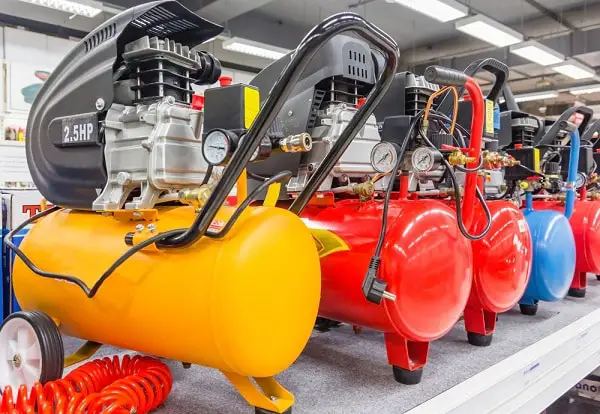
There you are, standing in front of the hardware store, thinking about a project. In your head, it has a nice finish. You pick up a tool, load some fasteners and drive away.
Then you realize: Oh no! There’s that tell-tale sign of a mismatched choice. Nail heads stick out, or if you try to make them flush they tear through the wood grain.
It is a small detail that ruins an otherwise large effort. Sometimes the nail’s head shape are what makes the difference. A Guide to Choosing Between Round Head and Clipped Head Nails It isn’t all subjective.
There are some good reasons for choosing one over the other. It depends on what you are using them for and where you are using them. The wrong nail choice can lead to wasted time, faulty connections, exposed nail holes, and more. In this article we’re going to get into the anatomy of both kinds of heads.
We’ll explore which one works better in different types of wood. We’ll discuss the looks of each head shape. And you’ll discover which tool fits which task so you know exactly when to pull the trigger.
How To Choose Between Clipped And Round Head Nails
Understanding Clipped Head Nails
With these clipped head nails (commonly found on certain Paslode models or other brands like Senco) you have a nail which has literal had its head, well clipped or sheared off on one side. What this does is cause the nail to be lower in the wood compared to a round head of equal diameter. Why?
The main benefit: lower profile. Less material sticking out above the wood. That is huge if you are doing cabinet making, trim work, etc., when you don’t want to fill the hole.
The nail just sort of blends into the background. But there is also a trade-off. Because the head is not as large, it doesn’t grab the wood as well.
The Power of Round Head Nails
It’s a pull-out versus brute-strength thing. This is a standard round head nail. You see this type of nail in just about every framing nailer from Makita to Bosch.
They have the most holding power because all of that force is dispersed around a complete circle on the wood surface. This is great if you’re trying to hold something together with shear force or tension, like when you are building a deck or framing walls. That round head digs in to the wood and holds better.
On the other hand, they don’t look as good. Because they are sitting up off the surface, you will nearly always have to set them below the surface and then fill over the dimple. So there is some extra work involved.
But for structural use, that little bit of extra work is typically worth it.
Matching Tools to Nails
Nail = Hammer. A nailer is a tool.
You can’t interchange a round headed fastener with a clipped headed fastener and expect the tool to work correctly. If at all. Most framing nailers is made only for one or the other.
Read the specs when you shop. The round head tools are marked, they have a wider driver blade and a wide magazine. The clipped head tools are narrow.
Put the wrong nail into the wrong tool, and you’re going to break a driver blade and jam. This is not good. And it’ll void the warranty.
Look at the manual. Confirm the match. This is a hard line rule that governs your process from the start.
Choosing Nails for Wood Type
What’s it made of? Nails are made for specific materials. Round head nails will hold better because they have more surface area when used in hardwoods such as hickory or oak that has hard grain and risk being blown out by driving a nail into them.
For dense grain, round nails are better. The wider contact point helps avoid splitting the wood on entry. Driving in too close to the end or at the wrong angle risks splitting hardwoods with clipped heads.
Softwoods like pine are less demanding; they forgive clipped heads that sink clean with little resistance. Pressure-treated lumber on your deck? Go with round heads.
Under foot traffic and furnitures, they don’t budge. Cosmetically, no big deal. Holding power trumps cosmo.
Ergonomics and Project Fit
Consider speed and convenience. Framing nail guns with round heads are typically larger and heavier. They’re designed for high volume use in job site environments.
They’re not as maneuverable. Finish carpenters appreciates being able to get into tight spots such as between joists or in corners. That’s where the clipped-head nailer excels.
It’s smaller and lighter. And it fits into places the other doesn’t. Weight can become a factor if working all day; it can be a fatigue issue.
However, the weight does add some stability. When pounding large nails, the gun absorbs the vibration better. For a framer building a house, it’s just part of the deal.
If you’re putting up baseboard, the light one wins.
Cost and Final Verdict
Prices do differ (and sometimes not as expected). You pay up to go pro: For example, a high-end round head tool like Milwaukee or Festool will set you back some coin.
But they offer precision and durability for professional use. On the flipside, guys with Ryobi or Porter-Cable tools does just fine doing it themselves on a budget. Same goes for clipped head tools.
Where price does matter, and more so then nail size, is often within their brand ecosystems. Just because you’re buying smaller nails doesn’t mean the tool is less expensive. Consider the overall cost of owning.
Magazine capacity, replacement parts; you know what jams up all the time can be more costly than something that runs smoothly. The bottom line is: Use clipped head if the appearance of the surface is most important; use round head if the structure needs to hold up to stress. Lots of guys has both.
They have one light finish nailer in the van for the details, and one heavy framing nailer in the back of the truck for the big jobs. Use the right tool for the job. If your work is specialized, you probably don’t need both.
But knowing the difference will save you money by not making an expensive mistake. The wood demands something from a nail head and it gets it: just right. It’s strong enough for function but pretty enough for show.
And once you understand which is which, it’s obvious. No more guesswork. No more building blind.
Just building on purpose. Building with intent that makes an already good project into a great project.