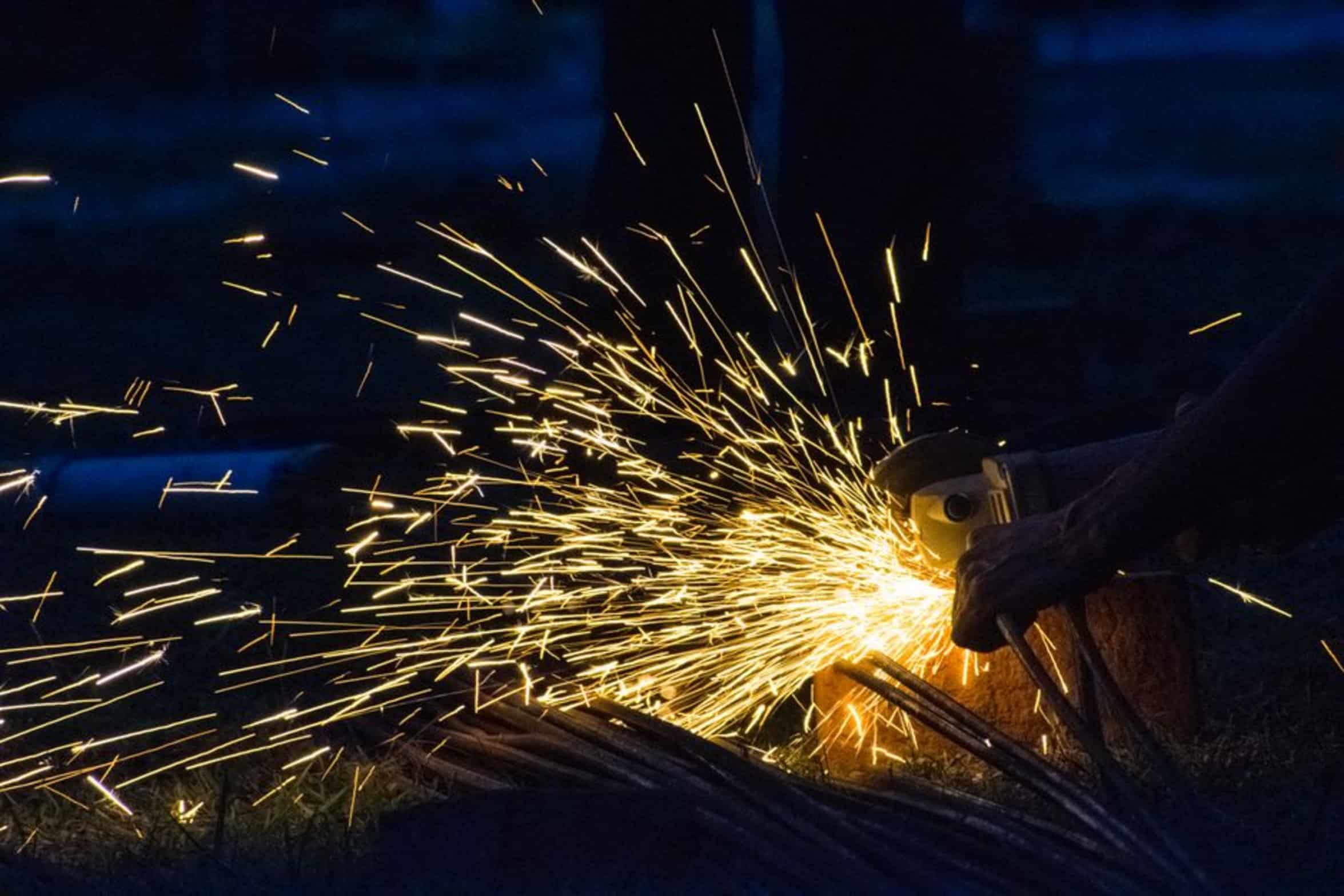
There’s something satisfying about watching a steel plate part under pressure of a thin air stream. It’s fast, it’s clean and you get a kerf like a surgeon’s cut, not a sawed-off stump. But an air cut-off tool is also one of the most misunderstood tools in shop.
A lot of folks think it’s nothing more than another angle grinder made for metal, but it isn’t. And its demands on your air supply are unique different because of this. Most shop owners has a compressor that handles nail guns or impact wrenches just fine, but those tools only sip air while an air cut-off wheel chugs it.
An air cut-off wheel, however, chugs air. Too little air causes the tool to stall out mid-cut, leaving your material ruined and a hot spinning disk that could snap off. Understanding cubic feet per minute can make the difference between a clean cut and a dangerous jam.
Guide to Air Cut-Off Tools and CFM Needs
Understanding Air Demand
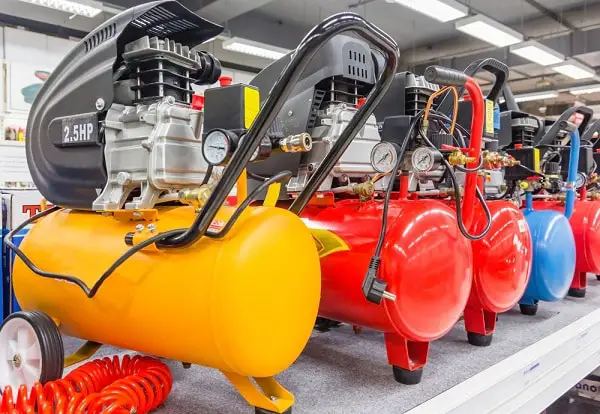
The first thing you need to know when selecting an air compressor is how much CFM you actualy need. It is not about how big the tank is or how much peak hp it has. How long can it blow at that rate.
If it doesn’t have the breath the tool can’t spin as fast as necessary to eat through heavy gauge structural tube or stainless steel or whatever. The blade starts binding up. The cut slows down, and then the heat begins to build.
Then we got a problem. Safety and accuracy are main benefits of an air cut-off tool. There’s nothing spinning in the cutting head, so there is no electric grinder with a motor that locks if the blade catches and stops turning.
Instead, the air will just stop pushing. There is no sudden kickback that launches an electric tool into next county. Second benefit: You can get incredibly close to walls or other materials without worrying about sparks igniting drywall or insulation.
The disc is also really thin, sometimes under a millimeter. It won’t create much waste at all and results in a nice clean edge that requires very little filing. That said, you have to maintain a constant flow of air in order to achieve that accuracy.
Without maintaining a constant flow of compressed air, it can’t turn the disc at its max speed. So when pressure isn’t there, it won’t be turning as fast. This means it will stop slicing and start grinding.
And grinding causes heat. Heat makes your metal warp and ruin the blade. It’s a bit like trading speed for danger; speed means quick cuts and staying cool, while danger means slow grinds and getting warm.
Choosing the Right Compressor
So you want to make sure you’re cutting fast enough so it slices but not so fast that it starts biting. Most people trip over the CFM part. CFM stands for cubic feet per minute.
And here’s where manufacturers publishes two figures. The first is the peak CFM, which is the CFM at zero pressure (a marketing number that doesn’t mean anything in the real world). What you need to pay attention to is the CFM at working pressure of 90 PSI.
At that pressure an air cut-off tool will use anywhere from 10 (18 CFM). Your compressor has to be able to maintain that level of airflow or the tool won’t work. Most pancake (small portable) compressors don’t have sufficient airflow.
Even if they reach desired pressure, they can’t keep up with demand. Every couple of cuts you’ll pause while the tank refills. It’s annoying and breaks flow.
For serious cutting you need a large dual-stage compressor or at least a single-stage that’s capable of a fast recharge rate. Having a big tank also stores energy. But the motor needs to be strong enough to refill it fast.
Safety and Cutting Performance
Surprisingly, the diameter and length of the hose matter too. The narrower the tube, the more air pressure you lose due to friction and bottlenecks. Think of a bottle with a straw: The longer the straw gets, the harder it is for all that air to get from inside the bottle to your mouth.
Your hose is the same way; a long thin hose becomes a bottleneck and starves the tool of the volume it requires. Get a short hose, and make sure its internal diameter is large. You want a half-inch (5/8-inch) hose for this application rather than a quarter-inch.
Maximizing Airflow Delivery
It will reduce friction loss and let more air reach the cutter. A small change here makes an otherwise moddern compressor seem quite a bit more capable. Use special blades for stainless steel.
Because stainless is harder and creates more heat (friction), you need to use a special blade that runs slower and feeds slower. A regular abrasive disc works fine on carbon steel blades, which cut easily. When using blades for aluminum, remember that although aluminum is soft, it’s also gummy and can plug up the abrasive disc’s pores.
Selecting Blades for Materials
To avoid this you have to be careful not to let it bind by constantly moving the tool around while cutting. Don’t push too hard as this will simply bend your disc or send it flying in bits. Patience wins over power; let the air pressure do the work.
Essential Safety Precautions
No safety precautions should of been considered optional when using this tool. Damaged discs or hitting an obstruction will cause them to break into shards. Small and moving at speed, those shards will hurt.
Full face protection is mandatory, not just safety glasses. Over time, that high pitched whine from the spinning disc can damage hearing. So hearing protection is recommended.
Secure your workpiece well and keep hands away from the cutting area. If that disc catches a loose piece of metal, it might go flying in an uncontrollable direction. Match the tool to the job.
A medium-sized compressor will handle most projects where you’re cutting some light framing or an occasional piece of conduit. But for constant cutting, or if you plan on doing lots of heavy fabrication with thick steel plate, spend the money on a bigger industrial compressor. Don’t scrimp on the air delivery system.
You’ll pay big bucks for a new compressor, but it won’t come close to the cost of a safety incident or a ruined project. With proper breathing, this handy air cut-off tool will show you what it can do. It’s a very useful ally in your metalworking shop.