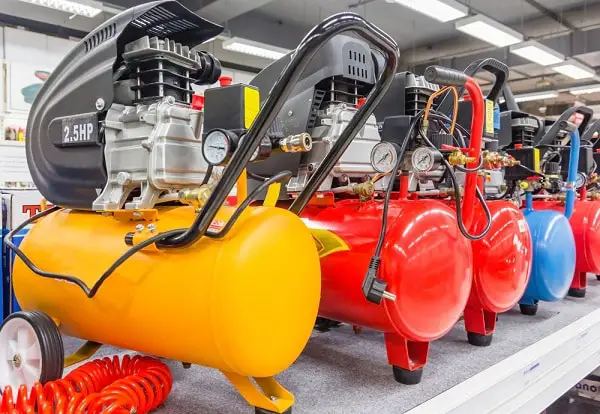
A weak nailer air compressor is an annoyance in the field. You’re on a ladder driving a two by ten into a header, and your nail gun sputters instead of firing. It slow you down and take away from your rhythm.
Framing is about keeping up with the team or your deadline. You need consistant power to keep up with the pace of crew or the demands of your own deadline, otherwise frustration build up. Learn how to choose a compressor for a framing nailer.
Choosing The Right Air Compressor Size
Understanding CFM Requirements
The interaction between duty cycle, volume, pressure is something you need to know. A lot of folks use a little small pancake compressor and end up waiting ten seconds between every shot. That costs them hours on a job.
Don’t do that. Choose one that will meet your needs. When looking at compressors, there’s one key spec; the cubic feet per minute (CFM).
It refer to how much air the compressor can delivers to your tool every minute. Framing nail guns, in particular, need a continuous flow of air to drive big nails into thick lumber. When the demand exceed what the compressor can provide, it will drop the pressure.
The nail won’t get seated correctly and you has to pull it out and start over. This not only cost money in wasted nails but also wastes your time. With that said, most framing nailers need 90-psi and two to four CFM.
This vary by model and brand. For example, one big reciprocating compressor like a DeWalt might be different than a Milwaukee M18 Fuel unit. Refer to the manual of whichever nail gun you use and look up its precise CFM need.
Don’t make a guess, guessing will result in an underpowered setup. While tank size does impact your workflow, CFM is actualy the more important specification to focus on. The bigger the tank, the more compressed air it can hold, so you’ll be able to drive multiple nails without having to re-fire the motor.
Choosing the Right Tank Size
For light duty tasks, a six gallon tank will do just fine and it’s portable, too. If you’re framing walls at a pretty fast pace, however, the motor will cycle on and off much more often. For serious framing work, use a 20 to 30 gallon tank.
This will hold enough air for spurts of activity and let you get a stretch of wall up before having to recharge the tank with your compressor. Downside: These tanks is heavier and more cumbersome. Getting one in and out of a job site might require a solid cart or even a trailer.
Getting one upstairs to a second floor? A heavy tank is no fun to wrestle up any stairs.
Single Stage vs Two Stage Compressors
For heavy duty usage, there are two stage compressors that provides greater performance.
They use two stages of compression to reach even higher pressures at lower temperatures. They cost more upfront and is noisier. They also produce more heat, but they run cooler under full load, which extends the life of the motor.
For big projects such as a whole house framing this is where it pays off in terms of reliablity. For smaller applications such as sheds or decks single stage units can do the job. Although not for sustained periods of heavy use.
Oilless vs Oiled Compressors
Most framers today use oilless compressors which don’t have to be topped off with fluids or even have their oil changed. They are low maintenance and clean. Oiled compressors last longer (in theory) but do require servicing regularly.
On a typical job site, oilless is the practical choice because it’s convenient. A little bit more durable, but easy to use wins out over oil.
Hose Length and Pressure Loss
The longer the hose, the more you can move around but the less pressure there will be at the end.
For example, a fifty foot hose might have a five to ten psi difference from the beginning to the end of the hose. The bigger the diameter of hose, say three quarters of an inch, the less that loss will occur. That’s a heavier hose but makes sure the air makes it all the way to the gun with power.
Final Setup Recommendations
So first look at the CFM rating of your framing nailer. Next choose a compressor with more than that rating but not so much more as to be ridiculous. Next get yourself a decent size tank capable of providing for bursts in your work flow.
Lastly plug it all together with a good hose. Done right, the air blows free and the nail guns work well. You build faster and is done on time.
That’s what we want.