If you’re offshore and your raft deflates, what do you do? The water is flat and calm. It is a warm, pleasant day.
Then your tubes starts to soften and your floorboards begin to sag. An hour later you’ve blown on those valves ’til your jaws ache, but all you have to show for it is frustation and fatigue. Safety aside, peace of mind come from having the proper inflation tool.
How To Choose The Right Air Compressor
Why Standard Pumps Fail
A regular car tire inflator (or even a bicycle pump) is what most folks inflate their boat with. It works for emergencies. No, that will not actualy inflate your boat.
If you have a big raft or RIB, you want a lot of air and small pumps doesn’t get enough air into it quickly enough. Get a machine designed for volume, not just pressure. The first thing to know about pumps is the difference between those two spec.
Understanding CFM vs PSI
CFM means volume, but many people only look at the PSI rating without paying attention to the CFM. PSI refers to pounds per square inch (pressure). CFM refer to cubic feet per minute (volume).
A typical car tire inflator can reach 150 PSI but typically puts out less than five CFM. That is adequate for topping off your sedan tires, but it is not even close to being enough for filling large tubes of a two-person raft. High CFM are necessary to get the job done fast so you don’t waste half the morning pumping and not swimming.
Electric Compressor Pros and Cons
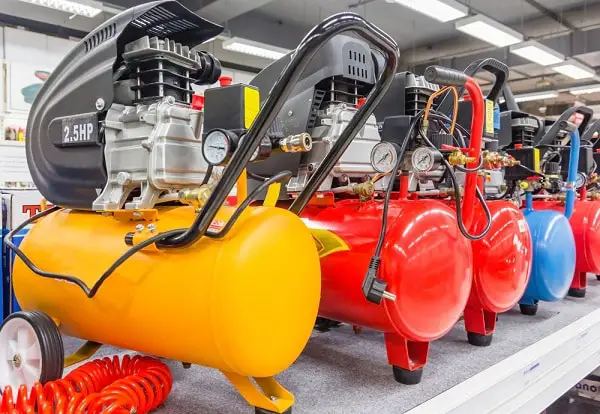
For most boaters, the ideal solution is an electric compressor driven either from a marine power outlet or from the 12 volt battery in their car. Companies such as Portable Air has units that simply plug into the cigarette lighter socket on your boat or car. These will generally pump out anywhere from ten to twenty CFM which means most recreational raft can be inflated in less than ten minutes.
The advantage of this approach should of been obvious. There’s no need to lug a heavy, gas powered unit around or crawl into the back seat of your car to run it. Plug it in and go.
There is a downside to an electric compressor. They suck down plenty of juice which means they can kills a small battery if you’re not careful. You also need a good power source.
If you have a designated 12-volt outlet in your boat, you’re all set. If you depend on your car battery, be certain that it is fresh or that engine is running. Pulling too many amps will leave you with a half-inflated raft and a dead car.
Gas Powered Compressor Advantages
It is a balance between managing power and being easy to use. For boats not equipped with an electrical system or for remote operations, a gas powered compressor will do the trick. There are some nice portable ones available from brands such as DeWalt and ARB that operate based off of fuel.
You will no longer worry about having enough power for your pump or being tied down by outlets. They make a lot more noise and is much bulkier, but they offer totally cordless freedom. If you’re miles away from anywhere and need to get a big ole rigid inflatable boat filled up fast, these compressors does the trick in a fraction of the time it take to do so manually.
They require more maintenance and has a higher price tag, but they offer unmatched capability. Also important is nozzle or chuck. Your inflatable probably needs a special rubber nipple or even presto-valve (most).
Choosing the Right Nozzle
You can’t just stick a regular air hose on there because it won’t seal correctly. This will cause air to leak and waste your time. Be sure to verify which type of valve your boat have prior to purchase of the compressor.
Lots of good ones come with an adapter kit, but it’s always worth double checking. Investing a few bucks in correct nozzle will save you an hour of aggravation on the water. Inflation also presents heat issues.
Managing Heat and Safety
The faster you pump, the more you risk blowing out a seam by stressing the tube material. Also, the faster you pump, the more the air heat up as it is compressed into the tube. Electric and many manual pumps has thermal protection or at least an auto-shutoff to prevent overheating.
Honor them. If the compressor feel warm to the touch, let it cool down. Better to be patient than blow a seam in your haste to get going.
Being patient make the equipment last longer. Best is the one you’ve got. A good air compressor make all the difference in the world whether it’s a heavy-duty gas-powered station unit on a serious expedition or a small 12-volt for a weekend trip.
All of a sudden instead of fretting over soft tubes, you’re out there loving life on the water. The raft is sitting high and tight, the air comes pumping in quickly, and off you go. And that peace of mind are worth every penny.