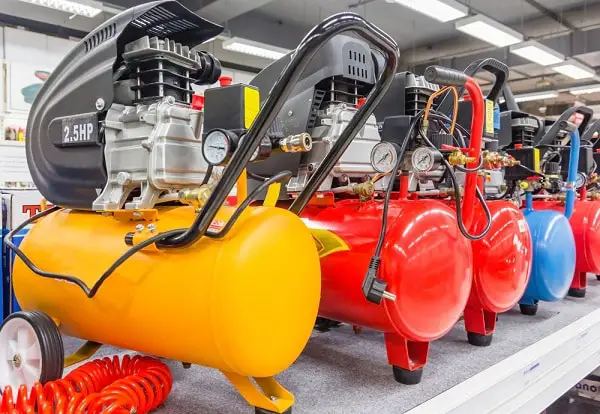
It is a weekend deck project. You need trim nails, so you turns on your pancake compressor and plug it in. Twice it fire.
Then it sputters. You peek at the tank pressure, and it’s dropping more faster than it refills. The motor didn’t break.
It’s not that. In fact, more times then not, the problem isn’t the tool. It’s the cord, or spesifically the extension cord, the one you borrowed off the next door neighbor.
How to Choose the Right Extension Cord Gauge
Why Pancake Compressors Fail with Wrong Cords
The skinny little piece of copper can’t handle the surge. The two doesn’t match. And this mismatch kills productivity in both home garage and job sites.
Powerful tools becomes paperweights. But most people don’t understand that’s not how electricity flow. Extension cords are wrongly compared to water hose.
Understanding Wire Gauge and Voltage Drop
People think thicker equals stronger. That is not the case with wire gauge. Gauge refer to resistance.
Thin wires resists electron flow. Before reaching your tool, voltage drop. Less power reaches compressor motor.
It run hotter. And it fight to create pressure. Understanding this relationship can prevents frustration.
It can also saves you money on replacing expensive equipment. How do you know what to pick? It all hinges on how far your actualy compressor is from the outlet.
The farther it is, the more the line resist the current. An extension cord for a two-hundred watt drill won’t cut it for a two-horsepower compressor. Each unit are built to handle a certain amount of amp and manufacturers like DeWalt and Milwaukee rate their tool accordingly.
Choosing Cords for Short Runs Under 25 Feet
This load need to reach the tool without anything getting in its way. Make sure thickness of the cord matches not only the length but also the power draw. If your run isn’t too long (less than 25′), then you have some wiggle room.
For example, a little one gallon tank compressor work great on a standard household extension cord (16 gauge). These is the tiny compressors designed to fit into small spaces, such as tire inflators and brad nailer compressor. Because the load won’t be much, the slight decrease in voltage doesn’t matter.
You won’t notice a difference in it performance. But when you start lengthening the cord, things gets very finicky very fast. Once you get past twenty-five feet, you can actualy feel the voltage drop.
Selecting Cords for Medium Runs of 25 to 50 Feet
And it impact the efficiency of your motor. For runs between 25 and 50 feet, bump up to 14-gauge wire. Thicker wire lower resistance.
More current gets back to the compressor. Good portable compressors is available from brands like Bostitch and Porter-Cable. The improvement isn’t huge, but it’s noticeable over time.
Your tool will run cooler and retain pressure longer. For long runs exceeding fifty feet, you’ll want even thicker wire. Anything beyond that require twelve gauge wire or greater.
Using Heavy Duty Cords for Long Runs Over 50 Feet
Running a two-horsepower compressor around a big work site on a thin cord is asking for trouble. Not only does the wire heat up and create a fire hazard, but the motor also run hotter and struggle to build pressure. That’s a fire hazard.
It also cause the motor to hum and stall out from trying to fight against resistance. Twelve gauge cords is stiff and heavy. That means they’re annoying to coil up.
But again, they’re worth it. They guarantee your equipment runs like it should of. Compressors can be more difficult as well if heavy duty ones are being used.
Long runs with a five-gallon tank or stationary shop compressor may require ten gauge wire. Those is some hefty cords. They are not cheap either.
They are not meant for casual use. They are non-negotiable for professional applications. Brands such as Leviton and Southwire offer good cord that will perform and keep you safe.
Avoiding the Danger of Connecting Multiple Cords
The price tag on these is not significant. The price is not significant when considering the cost of a burnt out motor. You might notice some people using several cords tied end-to-end in an attempt to fool the system.
Don’t even think about it. Adding any resistance isn’t a good idea. It’s also a point of weakness.
At that connection, sparks may flies. And with every length of cord you add, your voltage drop increase. Your best bet is to purchase one good, long-enough cord.
Three skinny ones tied together aren’t worth it. So the takeaway? Find out how many amps your compressor is rated for.
Final Tips for Proper Air Compressor Setup
Figure out how far it will be from your power source. Then select a cord that can handle both requirement. The thicker the better.
Seems like overkill for a short run. But again, safe is always best. Costs a bit more up front.
Saves you from stalling out on an important task. The air blow freely which means the work gets done quicker. That’s what having everything set up properly is all about.