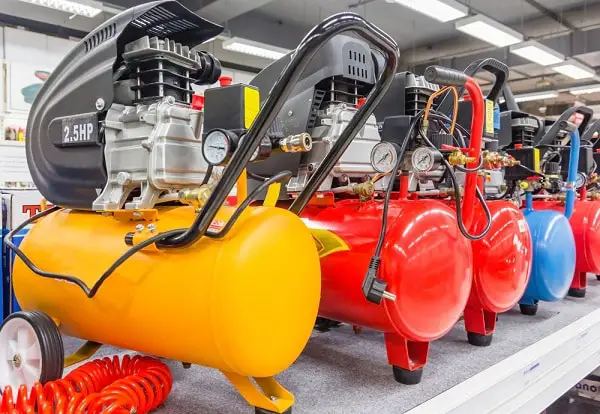
You’re doing a color match, the customer’s there, your compressor’s wheezing and then your spray gun just starts spraying a metallic flake. Air pressure drops, and a perfect finish quickly becomes something you have to fix. That looks bad if you want to charge premium prices for your work.
It wastes time and money, so it says “amateur” loud and clear. The key to a proper air compressor isn’t necessarily purchasing the largest tank. Instead, find one that fits your specific workflow needs.
A lot of shops makes things way more complicated than they have to be. They buy expensive portable compressors that can’t handle an impact wrench or they buy super loud piston compressor. Find something that produces constant pressure, without all the headache and constant maintenance, without all the heat, and without the noise.
Build the Perfect Air Compressor System
Why CFM Matters More Than PSI
One number matter most when talking about pros. And it’s not PSI. Many newbies obsess over PSI.
It’s simple to create pressure, but creating volume is difficult. Your spray gun may only require 40 PSI to run. But it requires a continuous flow of air to properly atomize the paint.
Get an air compressor rated at 100 PSI, but 2 CFM and you’ll be out of air in thirty seconds. You want a machine with enough air to do the job. The rotary screw compressor has become the gold standard for most moddern body shops.
Rotary Screw vs Piston Compressors
Unlike the more common reciprocating piston compressors used in your average hardware store, a rotary screw compressor put out a constant smooth flow of air as opposed to burst-style pumping action from a piston compressor. This prevents the pressure spikes and dips caused by a piston compressor. The former is significant.
When the air come out of the hose it’s like silk; you get an even coat with every stroke of your spray gun. It also means the compressor will run cooler and quieter, which is critical in a shop where temperatures can soar during summer jobs. So what’s the tradeoff?
Physical footprint and the initial cost of rotary screw units. These machines are not inexpensive compared to a traditional 80-gallon tank set-up. They’re also considerably larger and heavier.
But keep in mind how much time they save you. A piston compressor must cycle on and off frequently because it heats the air as it compresses. This means frequent pump and valve maintenance.
The screw compressor run constantly at one speed while changing based of need. It lasts longer and requires far fewer oil change. Because of this reliability, it actualy pays for itself.
There are some brands such as Kobold and Ingersoll Rand which has dominated this space for years and offer units that is built to run five days a week, eight hours a day. What do I mean by air treatment system? The compressor may be the best in the world.
Essential Air Treatment Systems
But it still produces heat, which produces moisture. Heat and moisture cause adhesion failure, blushing, and fisheye paint defects. Having a good refrigerant dryer or an aftercooler before the air reaches the spray booth is imperative.
Water traps can help, but alone will only get you so far. Dry the air before it enters the hose reel. Otherwise you’ll be doing more finish repair than painting.
Choosing the Right Hose and Filtration
There’s more to hose than meets the eye Inexpensive rubber will stretch under pressure so it literally makes your line smaller. The lower diameter cause friction which robs you of tons of pressure (particularly on long runs). Go with either braided nylon or reinforced polyurethane hose.
They’re far more flexible and lightweight. They hold their inside diameter no matter how much pressure you put in them. Most importantly, they ensure the air being generated by your compressor make it all the way down to your gun.
A little thing, but it saves you the CFM you shelled out money for. Do not skimp on filtration. Professional painters never do.
For painting jobs, you need a multi-stage filter system. This includes a coalescing filter, which removes both oil vapor and particulates. Coalescing filters is different than standard filters, which only trap dust; they grab the microscopic oil mist that escapes the compressor pump.
A small amount of oil in your air line will wreck a clear coat. Before spraying, install a 5-micron filter right at the spray gun, it’s cheap insurance and prevents a costly paint failure. Automation completes the puzzle.
Smart Automation for Body Shops
With modern compressors, you can network them. Monitor pressure, temperature and dew point with an app on your phone. This allows you to catch a failing component before it stops the line.
Not just that, but it makes a dumb mechanical device a smart piece of your workflow. It reduces the potential for human error. You no longer have to guess if the system is ready or not; you know for certain.
The best air compressor setup is an investment into consistency. It takes variables out of the paint process. If your air is steady, dry, and clean, then it’s time to use your hands for the craft.
You can stop worrying about the machine and trust the finish. And that shows up in each panel you touch. It is the difference between a good day and a great shop.