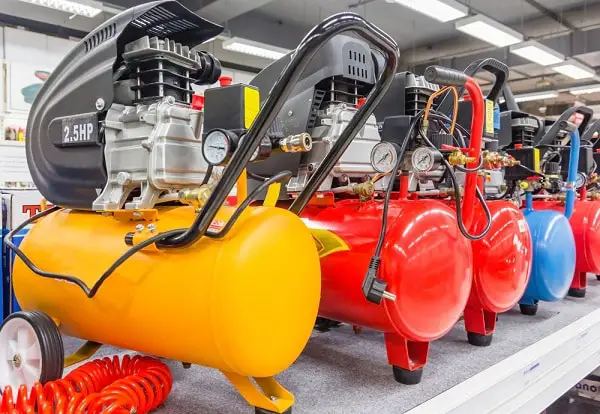
There’s a wall of humming motors and plastic tanks. There are humming motor and plastic tank! Walmart carry air compressors from $20 to hundreds of dollars.
When choosing one, it’s all too easy to feel like you’re about to over- or under-power your next project. Most folks do. They either purchase too-little power for their task and pick up the cheapest deal around for a job so simple the compressor whine endlessly.
Or they get a workshop beast for infrequent tire inflation while spending a fortune. Saving your sanity, and money, comes down to knowing what you actualy need. You see them all on the store shelf; Porter Cable, Airmate, Harbor Freight, etc. All look alike, but they perform very different under pressure.
Then they work quite differently. When it comes to tool, you want the right tool for the job. Don’t get hung up about the loudness of pump or size of tank.
You may need a small pancake model if you’re just hanging drywall. You may need a larger, heavier one when framing with lumber. Knowing that difference make buying tools smart instead of confusing.
How To Choose The Right Walmart Air Compressor
Choosing the Right Air Compressor
Portability vs. Power is first choice. Pancake compressors are slim and space saving, so they can slides into a tight corner of your garage or fit underneath a bench. And they’re affordable.
Popular Harbor Freight unit here fall into this category. Good for sports equipment inflation, finish work, light framing, you can throw it over your shoulder by hand, carrying it in one hand while still clutching your nailer in the other. But the downside?
Recovery time. A little tank will empty fast, requiring the motor to kick on frequently. This wear that motor out, leading to more waiting around as it rebuilds its air.
Vertical Tanks for Continuous Airflow
For continuous airflow, consider vertical tank. These types is taller, upright units that retain more air in their tanks while consuming no additional floor area. Companies such as Craftsman and Airmate makes some good ones.
Because these are heavier than pancake versions, they do sit on the ground and have a reservoir to keep your tool going longer between runs. That means if you’re spraying paint or cutting metal with a saw you can run a constant stream of air so it doesn’t sputter. And you get a cleaner finish.
The sound level remain high but there will be times when it’s quiet between motor starts.
Pump Quality and Durability
When it comes to motor quality, most low end unit fail. Most low end units has universal motors which can’t handle the heat well at all.
After running only a couple of minutes they overheat. Look for a cast iron pump which last longer and dissipates heat better. This will cost you a little bit more, like a Porter-Cable or Campbell Hausfeld.
But in the long run it’s worth it. If you don’t do a job every month or two, stay away from all aluminum pumps. Even though it sounds like it’s lighter, it won’t hold up to multiple jobs.
Noise Levels and Decibel Ratings
The other thing too easily overlooked is noise. Air Compressors all make noise. Some are louder then others.
Generally speaking, the quietest are the oil-less and/or inverter driven units. If it’s going into your home garage or if you share space with someone, that makes a big difference. Tolerating a hum is one thing; a shriek is something else entirely.
If you see any decibel ratings, look at them. That will help you determine whether this tool will fit where you want it or whether you’re going to need hearing protection.
Power Sources and Placement

Where does the tool go? That’s determined by your power source. An electric will be nice indoors and anywhere there’s an easy-to-reach outlet. A battery model is starting to appear if going really mobile is needed; however, these won’t run all day long for serious duty work.
Most homeowners will find that a regular old electric compressor on a good extension cord is the sweet spot, portable yet powerful enough to do what’s needed. Consider your cord size and length. Long, skinny cords reduces voltage.
They starve the motor. Bottom line: You want the best walmart air compressor for what you need to use it for. Don’t get a toy if you’re going to frame a deck.
Don’t get a monster if all you’re going to do is inflate a tire. Consider the budget, the space, the tools you have. Your air compressor will be there waiting for you when you need it.
And she’ll sit there quietly knowing she’s got this.