Metal is easly restored by sandblasting; but only if done propery with proper equipment Holding a nozzle, you clean away rust and decay from surface. It’s fast work, but it can be frustrating. The air might sputter; the pattern will break.
The rust won’t budge. What went wrong? Why doesn’t your compressor has enough air?
Usually it’s because there’s a disconnect between what the tool wants and what compressor delivers. Most people buy compressors based off the size of their tank. They figure big cylinder equal big power.
That is a big trap. How long can you operate without restarting the motor? That’s what a cylinder size tells you.
Understanding Air Compressor Needs For Sandblasting
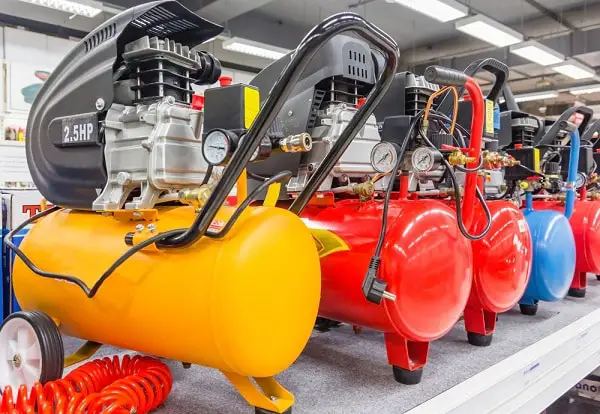
Why Compressor Tank Size Misleads Buyers
It does not tell you how much air get delivered to the blast pot, where it matters. You want consistent flow in cubic feet per minute. Less then that, you’re just shaking dust onto metal.
Understanding Working CFM vs Peak CFM
Compressor manufacturers list their compressors using two measurements, one of which is Peak CFM. This is what you see on sticker. It’s the amount of air the compressor are capable of producing at peak levels for a couple seconds.
That’s a marketing number. This is the working CFM. That’s the actual measurement.
It’s how much air the machine can put out consistantly for an hour. That’s your working number. That’s what sandblaster uses.
If you make a purchase decision based on Peak CFM, you’ll be let down. The compressor will be cycling on and off constanty. The abrasive won’t be shooting as the pressure drops and the tank refills.
You’ll end up standing around more while waiting for the tank to fill back up than you do actualy blasting. That matters a lot when you’re doing this kind of work. While paint sprayers or nailers use relatively little air, sandblasters requires much more air.
Air Demand for Effective Sandblasting
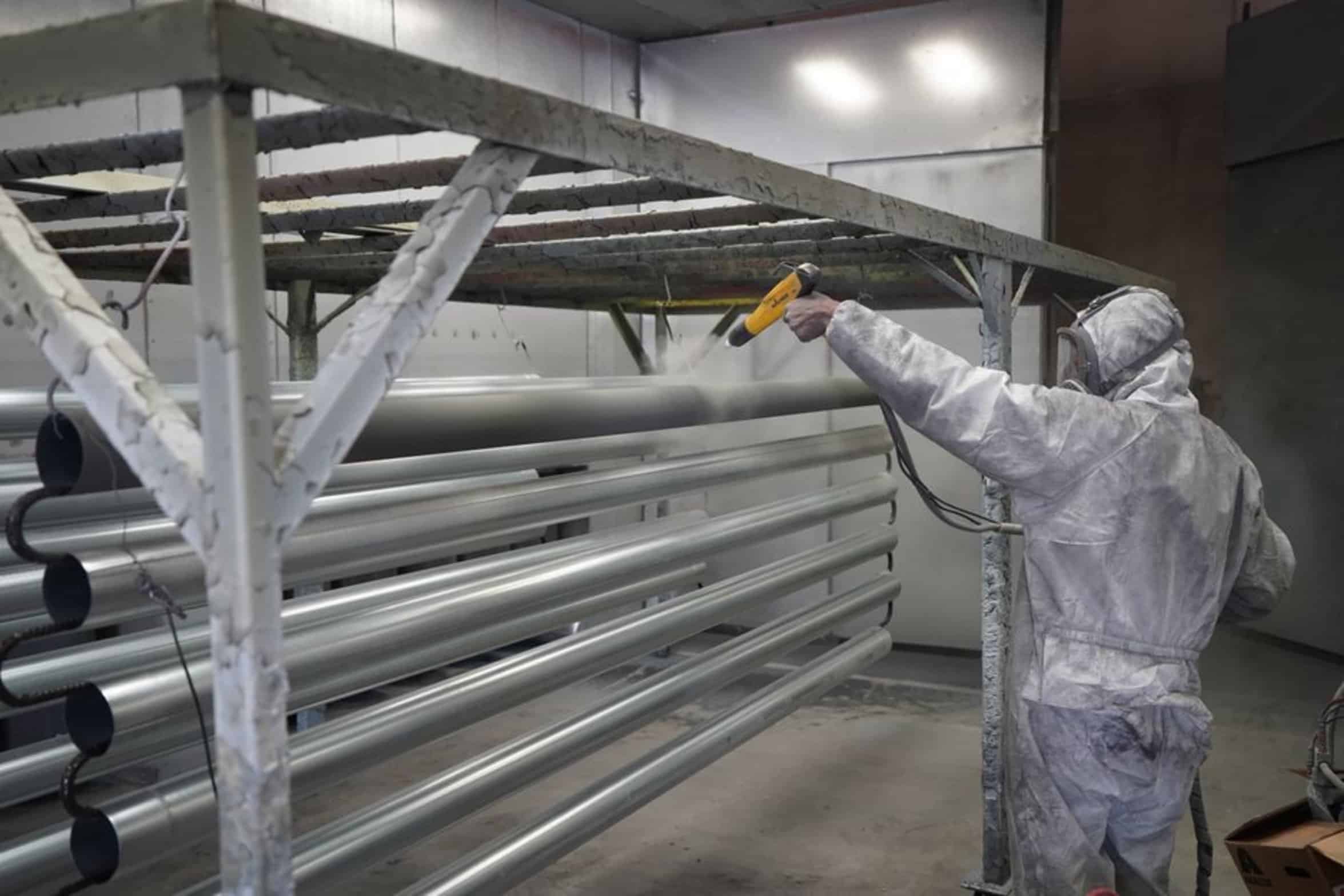
Between 15-25 CFM at 90 PSI is common for most handheld sandblasting gun or cabinets. High volume guns may require yet more air. Hardware store compressors typically produce 4, 6 CFM at such pressure.
This isn’t enough to meet the demand. When demand outpaces supply, the pressure gauge drop. You recieve a weak stream of grit instead of a cutting jet as the nozzle chokes off.
Frequently people report that sandblasting doesn’t work for them. They are using devices intended for occasional bursts of air during an operation where a continuous stream of air is necessary. There’s no getting around the math.
Double the demand (20 CFM) and divide by supply (10). You’ll be receiving half the performance. The tool will feel weak and sluggish.
Choosing the Right Compressor for Blasting
Typically, that means buying bigger gear. That’s where a big compressor come in. You want one with a big tank (as a buffer) and a high displacement motor.
Seek out 2-stage compressors. These is the ones that compress your air two times. They produce more volume at higher pressures.
Good heavy duty compressors comes from names like Kaeser, Ingersoll Rand, and Quincy. Expect maybe 10 to 12 CFM output from a good 20 gallon 2 stage compressor. It is better than a tiny one but it is probably not enough volume for serious blasting.
To get up into the 20+ range you’re talking about a 60-gallon or bigger compressor. These things are costly, heavy and take up lot of space. However, they also pump out the consistant pressure needed to cut through rust and scale at an impressive rate.
Matching Tools to Your Project Size
The cheapie 1-stage compressors will drive you nuts by stalling and overheating and make the task twice as time-consuming. Or maybe you want something that uses less air but still blasts. There is some built for lower CFM input.
Maybe it has a different way of delivering abrasives or uses a smaller nozzle. Slower, sure. Takes longer, yep.
But it will run off a smaller compressor. Sacrifice a little speed for accessibility. They work well for touch ups or small project.
It is not good for stripping a car frame. Know your project. If you’re doing a full blown restoration, don’t cheap out on air.
If you’re just cleaning up one part, maybe a smaller set up will do. Match the tool to the task. Let the job tell you what you need, not the price tag.
Key Takeaways for Sandblasting Success
The deal with compressors: Volume is everything. Forget those fancy looking Peak CFM ratings. Know the Sustained or Working CFM needed to support your nozzles.
Blast away, it gets easy when you’ve got air flowing correctly. The metal gleams. Rust flakes off.
And guess what? You’ll discover that the tool wasn’t broken after all. It simply lacked enough power.
Now you’re ready for the work ahead.