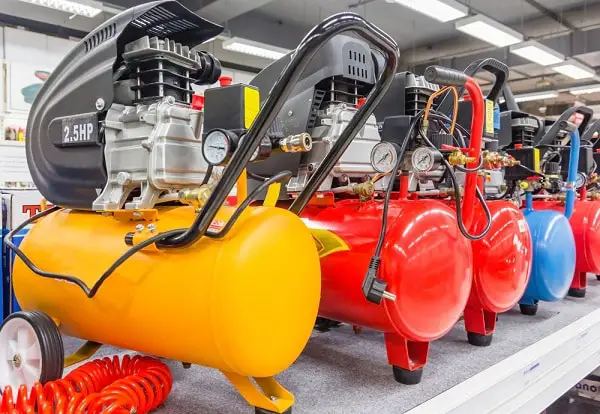
It’s an all-too-familiar panic. The engine won’t turn over and the dashboard tell you it’s time for help. You’re on side of the road.
In the past, this meant flagging down a stranger, hopefully someone who had the right tools at hand. But that chapter is closing. Today’s new breed of hybrids include both a built-in air compressor and a lithium jump starter, turning an emergency into an instant solution, and putting power back in your hands.
Most driver carry a simple jumper in their trunk “just in case.” Not many people carry an air compressor, so finding someone with both is very rare. With a moddern combination unit, not only do you solve the storage issue but also address two of the most frequent roadside failures: flat tire and dead battery. Make one trip for one solution: fill up your spare and start your car again.
These have become reliable workhorses due to the maturity off the technology. The key is understanding what specs matter while standing at the side of the road. Check the peak amperage rating.
How to Choose a Jump Starter With Air Compressor
Understanding Peak Amperage Ratings
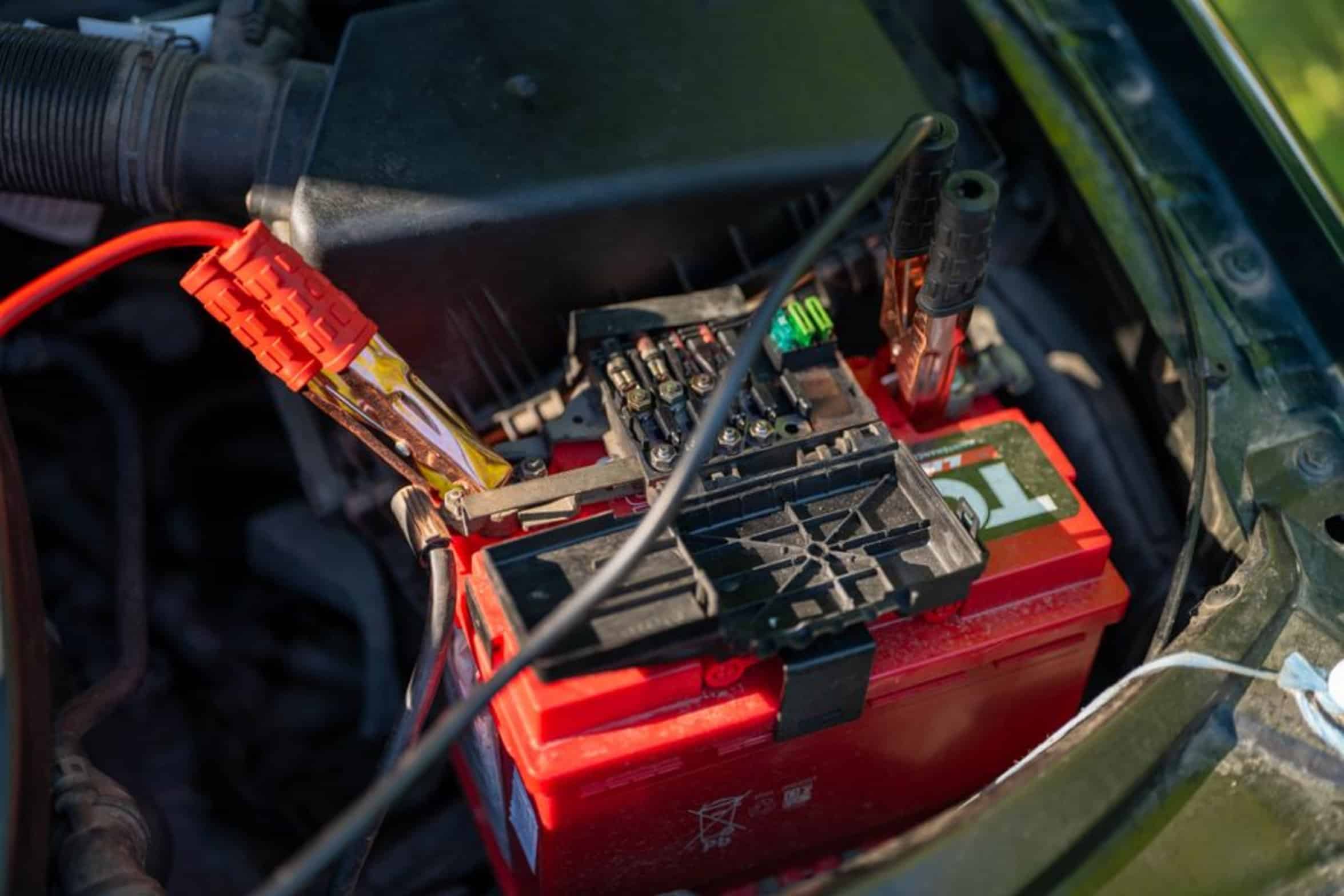
This is the maximum amount of current it will deliver to crank the engine. For a typical SUV or sedan, 1,000 amps are a minimum. Large pickups and diesel trucks requires something closer to 2,000-3,000 amps.
Watch out for marketing which focus on continuous amps, which is misleading. Peak amps measure the surge of juice required to spin over an engine from a cold start. That’s what differentiates the click-click-click from starting.
The greater your peak, the more forgiving the unit will be in bad weather. The other key aspect of performance is the battery itself. That’s measured in milliamp hours.
Choosing the Right Battery Capacity
The bigger that number, the more it will allow you to jump someone’s battery multiple times before recharging the unit. That’s what you don’t want, jumping your car one time but being dead weight afterward. Daily commuters should look for at least 10,000 milliamp hours.
If you travel frequently or if you drive an older car with a weak battery, go up to 15,000 or higher. Modern ones feature Lithium Iron Phosphate cells, which lasts longer and are safer than older Lithium Ion varieties. The latter part explains why they’re so popular, they’ll last months sitting in your trunk without draining much.
Evaluating Air Compressor Performance
Let’s break down the air compressor option. Inflation speed is measured in liters per minute. If you have a normal car, you’ll be looking for something that inflates from empty to a full thirty-five psi in less than ten minutes.
When you’re cold and impatient, anything below that seem like forever. Also check the max pressure that the compressor reach. Normal car tires require around 30-40psi, while certain trucks or SUVs might requires slightly more.
Make sure you get a compressor that can reach at least one-hundred psi so you have a little cushion. There’s no point getting one that maxes out at eighty psi because it won’t efficient pump up bigger tires.
Essential Safety and Convenience Features
It’s easy to forget about convenience features until it’s dark out and you’re fumbling around trying to connect things.
Positive and negative markings on the jumper cables would be ideal, and even better if they were color coded for easy identification. The clamps is designed by some manufacturers to avoid accidentally connecting them backwards; this is an added safety bonus. The air hose shouldn’t be too short so you can reach every tire without moving the unit back and forth.
Six feet is a decent minimum. Having the option for integrated LEDs is a big feature as well. Having both strobe and a bright light lets you alert others around you that you’re working on your vehicle.
It provides another level of safety outside of getting the engine started.
Durability and Portability Considerations
Because they spend life inside your trunk they have to endure some rough conditions. In the summer your trunk is sweltering hot and in the winter it’s freezing cold.
Look for something with a durable, sealed housing that can withstand moisture and dust. Something rated IP65 or better are ideal. Also keep an eye out for the quality of its clamps.
Those cheap plastic housings crack if you drop them on the ground. However, the sturdy connectors and metal reinforced handles last years longer. Companies such as Anker and JumpNogo has really worked hard to make rugged products.
These are tools that they know are going to get kicked around. It costs more up front for the durability, but it’ll save you a trip back to buy another after a harsh winter.
The last tradeoff is portability.
While these will fit in your trunk, they are larger than a simple power bank. However, they won’t be as large as a portable generator either. They range from about 3 (8 pounds).
So what do we mean by portability? That means balancing how much power you want vs how much you want to carry around. You could have a giant that starts a diesel engine no problem.
But if you can’t pick it up and get it out of your trunk, then what good is it? Get the smallest unit that has enough capacity and amps for what you think you’ll need at its worst time. Don’t get the largest one because it sounds cooler.
Remember this is a tool you will pick up and run with. It’s not going to become a project itself. Even though it is small, this makes a huge difference in an emergency.
When selecting a portable jump starter with air compressor, match your comfort level with what you need for your vehicle. You don’t want something that lacks the power to start your engine in the cold. You also don’t want something that cannot provide enough air pressure to inflate a tire if it goes flat on the side of the road.
Don’t skimp on battery capacity or peak amps. Those are the guts of what this tool is designed to do. It is going to either save your butt or cost you a tow truck call out.
Spend the money on a reputable brand with good reviews and a decent warranty. You don’t want to be stranded wondering if your stuff will work or not. You want to know it will.
That peace of mind costs a bit more but it’s worth it. Check the pressure, keep it charged, and stay ready. The road is crazy, but being prepared doesn’t have to be.