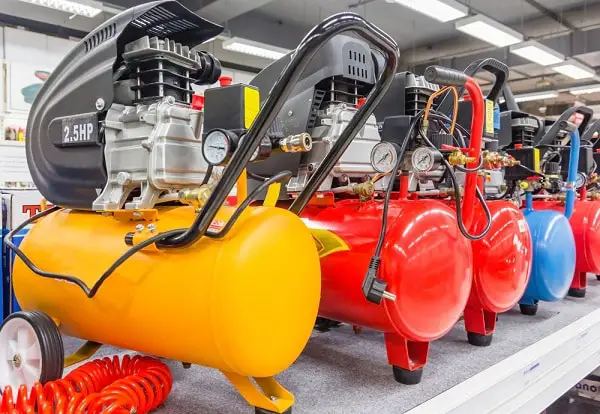
Big motors don’t get along with small apartment… It’s what kills most people’s dreams about having a home shop. While maintenance and finishing job require air tools, they also requires more power than is available in most small spaces.
Compressors take up too much space and make too much noise in urban residences… Not ideal for a small house. But you still want the convenience of pneumatic tool.
It’s time to change your mindset so you can tackle basic assembly projects without annoying your neighbors. The size of the machine is about efficiency and discretion, not raw horsepower. No one wants a big tank sitting in there living room.
What they want is something quiet, quick to cycle, and small enough to fit into narrow space. There are many out there that just won’t work for you. They are too big, too small, or too loud.
It’s a balancing act between pressure, volume, and silence. Get it right and you have a good tool. Get it wrong and what you have is a noisy paperweight.
How to Choose the Best Air Compressor for Apartments
Why Standard Compressors Fail in Apartments
For those with limited space, an oil free compressor is the way to go. They don’t require any maintenance other than the occasional draining of tank. For the more casual user, that’s not a problem as you’ll probably just forget to check your oil level anyways.
Benefits of Oil-Free Compressors
A solid budget pick is the Husky 4 Gallon Pancake Compressor. Strong enough for light duty work, it’s cheap and readily available. It’s also flat so it can fit in a corner.
But man does this thing get loud. Like a lawnmower in a tin can kind of loud. If you’re on thin walls or have roommates, this may be a bit much for you.
Gets the job done but will draw some attention.
Pancake Compressors: Budget and Noise
Less floor space, If your floorspace is limited, then a vertical tank (like this popular one: Bostitch HAC63B80) saves space. Because the air compressor doesn’t spread out horizontally, but rather stands tall, it leave more floor space open for your workbench and whatnot.
This also means it cools better since heat rises off the motor.
Vertical Tank Compressors for Space Saving
Tall profile, It stands tall rather than spreading out, leaving more floor space open for your workbench or yoga mat. Also, depending on how long your hoses are, tripping over them could make the air compressor fall onto its side.
To prevent this, secure it to a sturdy base or put it in an area where it won’t be bumped into. This is good for renters because a wide air compressor is harder to fit in a car trunk than a tall one. So if you’re renting, this type works well.
Quiet Axial Flow Compressors
For those worried about sound, consider going with an oil free high end model or one with an axial flow compressor. For instance, you might like the Porter-Cable C20020. It’s not completely silent, but quiet enough for what you need. It has a covered motor so it cuts down on the loud high pitched whine people complain about.
And the tank capacity is large enough that if you do little bursts of work, it doesn’t cycle all the time. Cycling constantly will wear out the motor and make it louder. What you want is something that turns on, fills up the tank, and then sits there turning off for a minute or two before you need it again.
This makes the tool nice to use rather than obnoxious.
Tankless Portable Compressors
For small spaces, there are now tankless compressors as well. Take the Makita 1/2 HP Oil-Free Portable Air Compressor, for instance.
It has no tank. It is simply a high-speed turbine that pumps air straight to the tool. That eliminates potential for rust and also results in a much lighter unit.
Stick it in your closet or take it up the stairs. But without the buffer of stored air, you’ll want something that requires less CFM continuously used. You might staple occasionally.
Blow out some dust? Fine. Heavy framing nailer duty?
Not so much. Only consider this route when your work is occasional.
Weight and Portability Considerations
In addition, portability matters more than you think.
A 50-pound compressor isn’t very portable in an apartment. You can’t shove it into a closet when you want extra floor room. You also can’t take it outside on your balcony for a breath of fresh air.
If you know you’ll be moving this thing around frequently, consider units below 20 pounds. The Chicago Pneumatic CP1001 is smaller and lighter (but also lower powered). It’s a tradeoff.
And in apartments, there are always compromises to make. What are you willing to sacrifice? Space or power?
Storage, Ventilation and Safety
The last step is storage and safety. Compressors produce heat, so they must be ventilated even if you have a tiny unit. Leave plenty of space all around to allow air flow…
Again, at least six inches. Drain the tank each time too. Rust is a sneaky foe that eats from within and moisture collects in the tank.
Better to spend a few more bucks for a good quality compressor than buy a cheapie that only lasts half a year due to lack of care. It’s a little thing, but protects your investment.
Buying Guide Summary
Finding the Right Air Compressor for an Apartment Buy a smart unit for the work you do now Don’t buy a large unit because you might want to do projects that you’ll never start.
Buy a small unit if that’s all you need. Don’t buy a loud unit if you can hear the TV over it. Buy a quiet unit if that won’t be a problem.
Buy a unit that fits your space.