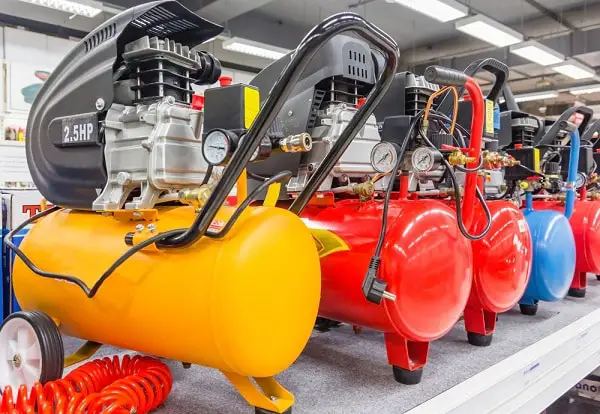
Somewhere near your desk in your house or office, you have a can of compressed air sitting around. Maybe it’s on top of your stapler, maybe it’s stuffed into junk drawer with some random batteries. Either way, you know that it’s there.
When crumbs gets on your trackpad, or dust collects on keyboard, you grab the can, aim, shoot and life is good. It’s quiet, fast and efficient. Until you need it once more, you don’t even think about the can.
But there’s a deadly physical risk lurking beneath that convenient feature. And no, shaking up your can of cleaner isn’t anything different than shaking a soda bottle. It’s much worse.
That household tool becomes an explosive waiting to go off. Why? Well physics.
And it’s important to know why because most folks has never learned about the science behind the warning label. They simply think it’s some standard corporate “hey we’re liable for you” mumbo jumbo. You see, the gas in those aluminum cans are pressurized and volatile.
Why Shaking Compressed Air Cans Is Dangerous
The Hidden Danger of Compressed Air Cans
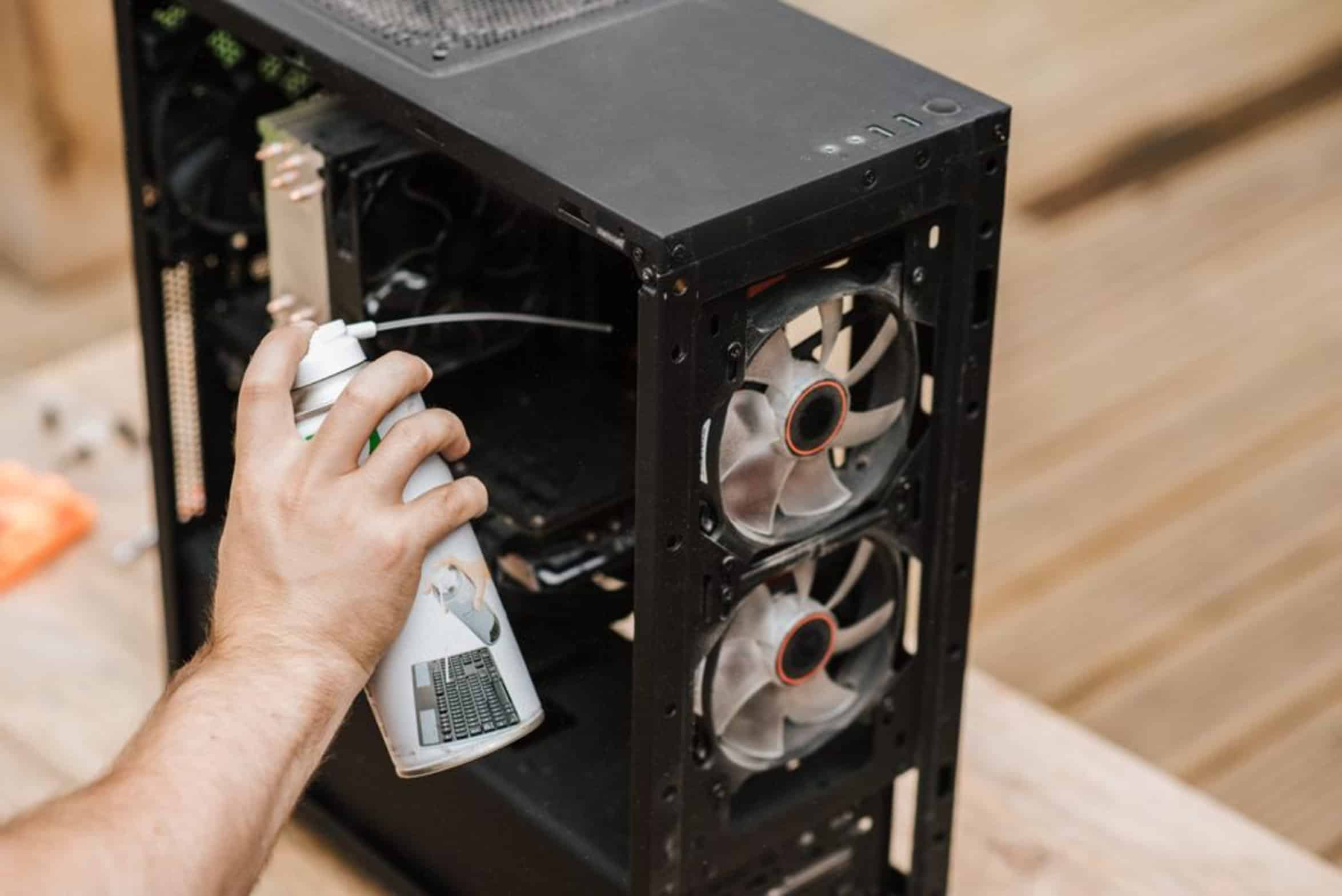
You’re working with a liquefied propellant. Difluoroethane or isobutane are common hydrocarbon-based liquefied gases used as propellants for most canned air products. It’s liquified and sitting in a sealed metal can at a very high pressure.
By depressing the nozzle, you drop the pressure. That causes it to turn into a gas. That expanding gas expels the air to blow off your gear.
Physics of Pressurized Liquefied Propellants
This fragile balance are disrupted when you shake the can. By physically shaking the contents, the liquid propellant begin to churn. This churns up a slurry or foam of liquid & gas bubbles.
In the closed container, it’s an extremely unstable combination. As the two phases violently churn together, the internal pressure will spike quickly. At any given moment, the can should be holding its constant pressure.
How Shaking Disrupts Internal Pressure Balance
It isn’t engineered to handle random, abrupt pressure spikes due to shaking. That’s what people fail to realize about that design limit. This has everything to do with the temperature differential inside of the can.
When you’re using it, the expanding propellant will pick up heat from its surroundings. That maintain the pressure. However when you shake it, you’re preventing the proper temperature control.
Shaking causes mixing. This creates friction, breaks down heat transfer, and creates a local hot spot. Pressure also changes but the safety valve might not be able to react fast enough.
Uneven stress weaken the metal. Think about what happens when you take a can of compressed air versus a can of soda and shake them. You’ll pop the top too soon on the soda, and it will probably spray foam all over you and/or explode.
That’s both annoying and messy to clean up. Instead, imagine opening a can of compressed air. Those have much greater pressures and are filled with flammable gases.
Risks of Explosions and Metal Shrapnel
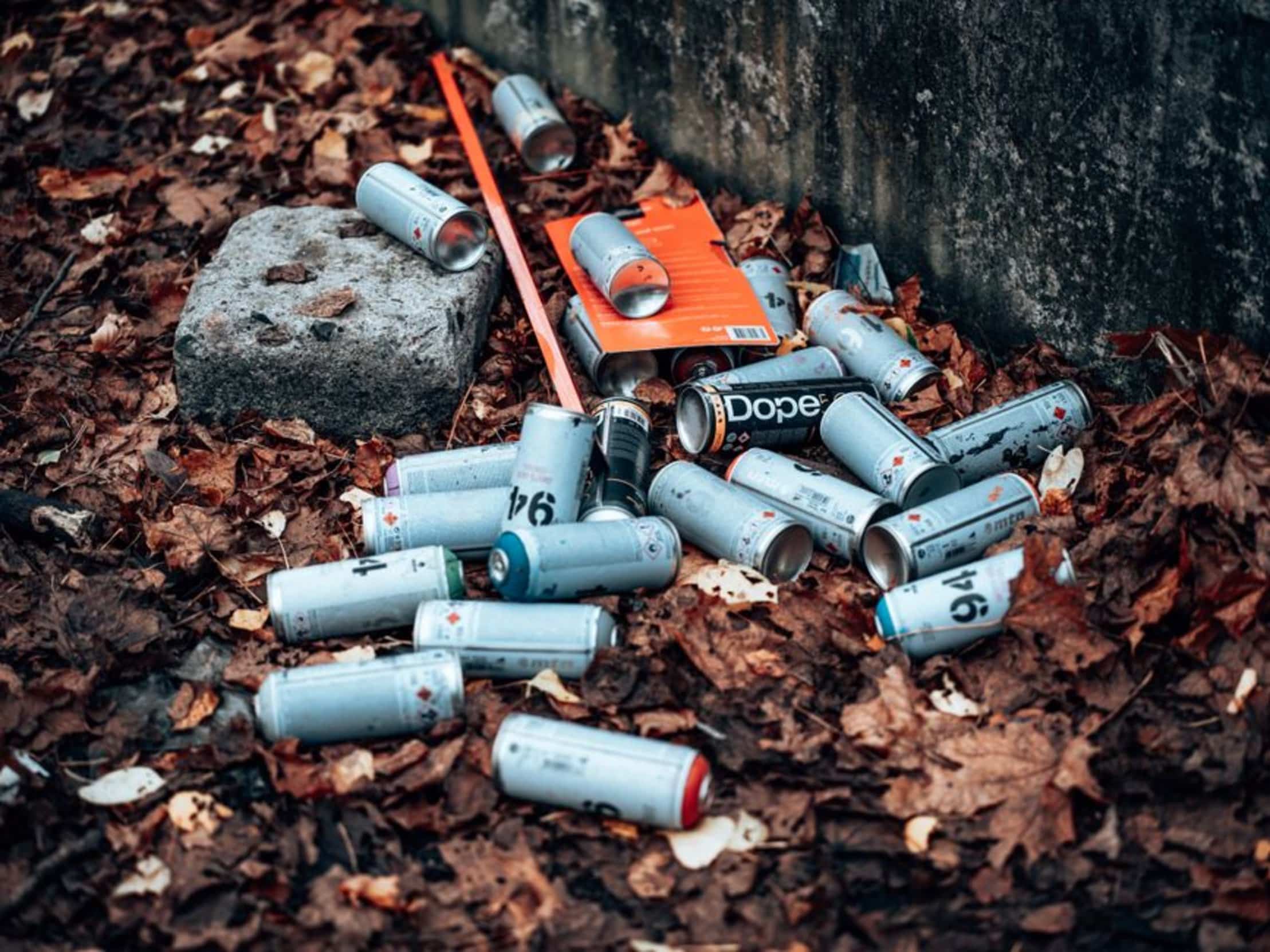
When that pressure is greater than the yield strength of the can, it doesn’t merely leak out. It explodes violently. Metal shrapnel fly outward powerfully.
These are not hypothetical; there have been industrial safety reports of injuries due to incorrect handling of pressurized aerosol cans. Lacerations or worse occur when the can’s contents rupture and create a shrapnel effect. The expanding gas can produce an instant concussive blast wave as well.
If it happens next to your face (or in a small room), the damage will be done fast. The risk is disproportionate to the benefit of saving thirty seconds before spraying. Save 30 seconds by waiting a little longer.
You’ll pay less for patience than any other form of insurance. The risk grows greatly with storage conditions. If you leave a can exposed to direct sunlight or your hot car, it will increase the baseline pressure inside the can.
Storage Safety and Heat Stress Factors
Then you take that heated can and shake it. That’s when it’s much more likely to break open because it was weakened by heat stress. The warnings specifically say to keep this can out of the sun and in a cool dry location.
It’s not because they’re trying to protect the product. They’re trying to protect the structure of the can. Heat increase the gas pressure and weakens the metal.
To make their burst work better, some people shake the can to mix the contents and thus “speed” the cleanup process. Unfortunately, this is a very bad idea. Inside the can, the propellant is thoroughly mixed at the factory.
Any shaking merely forms a potentially dangerous two-phase mixture. The spray may momentarily appear to be more effective. However, the result could be anything from an ineffective clean air blast to a frozen liquid spray that damages your electronics.
It is not a good tradeoff. Another thing folks miss is nozzle design. A lot of cans use a dual action nozzle, which will spray vertically as well as upside down.
Nozzle Design and Proper Usage Techniques
If you spray upside down it sprays the liquid propellant right out. It is very cold and will freeze moisture on circuits, possibly cracking plastic components. And if you do shake it first it will increase the likelihood of a catastrophic failure.
It’s already a harsh pressure dynamic in that position. Add to that shaking and the system go beyond what it can take. Using it properly is easy, and doesn’t require any work on your part.
First, just let the can set until it’s ready for use. Next, make sure whatever you’re spraying is level. Third, don’t hold the nozzle too close to delicate parts.
Fourth, spray in quick bursts. Don’t freeze the can. Fifth, keep the can upright except where noted in design.
All this takes seconds. It makes everything safer. And it keeps the canister going longer by preserving the propellant.
Final Safety Precautions for Electronic Cleaning
Understand the pressure. That’s why there is a warning label. And it is in bold lettering; because if it says do not, then don’t.
Don’t mess around with it. Don’t think that maybe if I’m really careful it won’t go off. Think again.
One day, it won’t. Next time you grab that can of dust blower, think about how it works. Because a little bit of quiet goes a long ways.
Keep it calm and keep it safe.