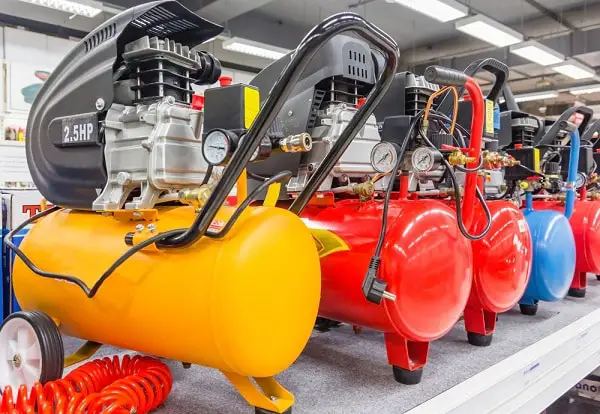
That’s what you get, a weak cough, instead of a sharp thwack, and then you notice the nail is only halfway into wood. What happened? You’ve run out of extra air.
Everything appears just fine: the tool, the valve, the hose… No, this isn’t a matter of improper technique; no, it’s not a hardware issue either. It’s an air-behind-it issue. And it can occur frequent if you’re installing trim work or starting to frame a deck where a steady rhythm are required.
Sure, a small compressor may be able to fill a tire in seconds, but you’ll wait for the tank to recharge after each and every nail. What size tank do I have? That’s only part of the story.
The other part is how quickly does your tool suck up air and how quick can your compressor replenish it? Nailers are rated by manufacturers with a number, most often listed as CFM which stands for cubic feet per minute. This number reflect its rate of consumption.
How To Size Your Air Compressor Correctly
Understanding CFM Consumption vs Delivery
Next comes the number for your compressor; this one is also expressed in CFM but this time represent its rate of delivery. Every time you pull the trigger on the nailer, you’re borrowing air from the tank if the delivery number is smaller than the consumption number. And when your tank is empty, it’s empty.
Wait…and go stalled out on the job. This understanding is what will save you from purchasing a huge industrial unit for a weekend shed, or worse, being saddled with a pancake compressor that can’t manage a day’s worth of siding work. Match your machine’s capacity to the tool’s appetite.
How do you know how much capacity you actualy require? Don’t overpay for power you will never use. Here’s how to figure that out.
Matching Nailer Requirements to Compressor Capacity
You can start there and find out what the CFM rating is on your nailer. You do not have to guess. Read the manual or look at label on the Makita or Paslode tool.
Two to four CFM at ninety PSI is about how much a framing nailer drinks. A finish nailer is lighter and might only need one to two CFM. Brad nailers are sippers; they rarely goes over one CFM.
That is the bare minimum (CFM) rating and that’s how many CFM the tool demand in one unbroken minute of firing. It’s your fuel gauge on the whole operation and you can’t ignore it. Look again at that compressor.
Decoding Compressor Pressure Ratings
Maybe it’s listed with a four CFM rating on the sticker of the tank and that sounds great for your three-CFM nailer. But read the fine print. Consumer air compressors rates their CFM at a certain pressure, maybe at zero PSI.
It might be rated at an arbitrary standard like fifty PSI. Nailers require air pressure at the gun, typically somewhere in the range of seventy to ninety PSI. The higher the pressure, the less efficient an air compressor will be.
A four CFM-rated air compressor may only output two point five CFM at ninety PSI. That is where trouble happen on any project. Convert the CFM rating into whatever pressure your tools actualy operate under.
Tank Size and Buffer Impact
Tank size also serve as a buffer. Because there’s more air in a bigger tank, it will take longer to deplete the air until the pressure hits the trigger point. You could theoretically have enough air in a 5 gallon tank to shoot ten or fifteen times with a framing nailer but in a 30 gallon tank, you’d have like forty.
That helps when you’re just firing off a bunch of nails for a quick job. If you’re just hanging up some pictures, then a small tank will do. But if you’re sheathing a whole house, you want the buffer.
Motor Power and Duty Cycle Considerations
But there’s a catch with the buffer: The tank doesn’t fill back up on its own. The motor fills it back up, and the motor’s displacement and size determines how quickly that buffer refills. This is where many people make a big error, just focusing on the gallons of the tank.
So if you have a really big tank and a weak motor, yes, you’ll be waiting a while for the tank to drain, but when it does it will refill like a slow leak. It might even be a hemorrhage. Or a small tank with a strong motor that can refill fast, but you constanty need to top it off.
It all comes down to how you work. For continuous working, the size of the tank become less critical. Instead, the strength of the motor relative to what you consume matter most.
Does it keep pace with your consumption? What is your compressor’s duty cycle? Most cheap compressors aren’t made to be used constantly; they will overheat.
To run nails nonstop for an hour, you want a good quality single stage compressor with a cast iron pump or better yet a two-stage compressor. Some brands like Porter Cable or Ingersoll Rand makes these heavy-duty job site compressors. They’ll cost a bit more when you buy them, but you won’t have downtime from overheated motors.
When the job calls for it, you get what you pay for. Another factor is hose size and length. The longer and thinner the hose, the more resistance you’ll have and therefore less pressure reaching the gun, which lowers your available CFM.
Optimizing Hose Selection for Airflow
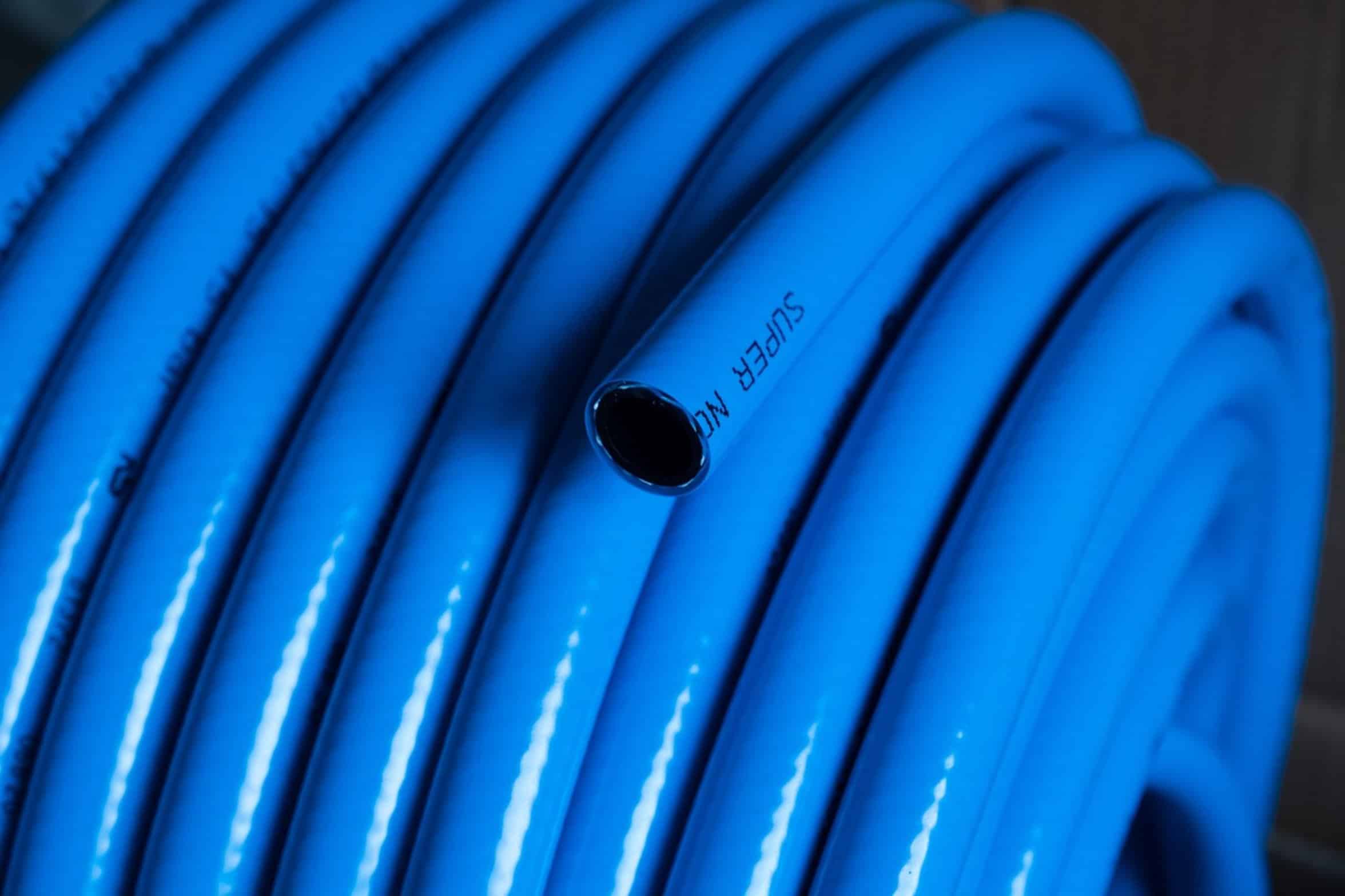
For those running longer hoses, go with a three-eighth inch as opposed to a quarter inch as it retains the airflow much better. This simple change makes your compressor feel a bit larger. Plus it gets the air where it needs to go fast, tank to nailer.
Lastly, do the math. Say your compressor puts out three CFM at the correct pressure, and your nailer require three CFM. You’re covered with some room left over (safety margin).
Work away. But if your compressor only puts out two point five CFM, you’re in the red, and need to let it fill back up each time you shoot a few nails. Figure out how long you’ll be running, and what pressure it is, then match it to what you really need.
That way when it comes down to crunch time on a critical day, you won’t get stuck with that frustrated feeling of a hung nail gun. Match the machine to the job, not just the size of the box, and you’ll find your next project runs more smoothly.