Nobody likes getting a flat tire. No matter how patient or on time you may be, no flat tire cares. It strike while you’re sitting in traffic, or parked alongside a ditch.
Before, it require a jack, a heavy spare tire, and the proper tools to get it changed before storm arrived. And that is changing. Inflate your tires.
These days many driver have foregone carrying a spare for a portable tire inflator. These small compressor plug into either a power bank or your car’s cigarette lighter and inject air straight from the device to the valve in your tire. It eliminate the manual labor of swapping out tires and frees up trunk space.
Not all inflators are created equal, though, with important but overlooked details making the difference between a broken piece of equipment and a handy tool. When selecting a model, don’t just go by the hype. Understand the relationship between its build quality, power, and pressure.
Understand how it will perform under stress. It needs to be something that function when you require it. What’s important?
How To Choose The Best Portable Tire Inflator
Understanding PSI Requirements for Your Vehicle
You are shopping for a portable air compressor. First thing to check… What’s the max PSI?
Passenger vehicle generally run between thirty and thirty-five pounds of pressure per square inch. Trucks and SUVs might need a bit more. An air pump with one-hundred-and-fifty PSI will be overkill on your sedan.
And chances are that the motor won’t hold such high pressure. Best to find something from one-hundred-to-two-hundred PSI. That leaves some wiggle-room for oversized tire without purchasing industrial equipment.
Remember, the highest PSI isn’t always maintainable.
Choosing the Right Power Source
Think about how you’ll recharge it Typically, these pump take their juice from your car’s twelve-volt port. While handy, that means they’re only usable while you have a car nearby.
Alternatively, some of the newer ones will accept a USB-C charger and draw power from a big ol’ power bank. That’s nice for when you want to pump up your bike tire inside, or when your car battery dies. Keep in mind: Plug-in types will last longer then battery ones.
Keep that difference in mind.
Build Quality and Hose Considerations
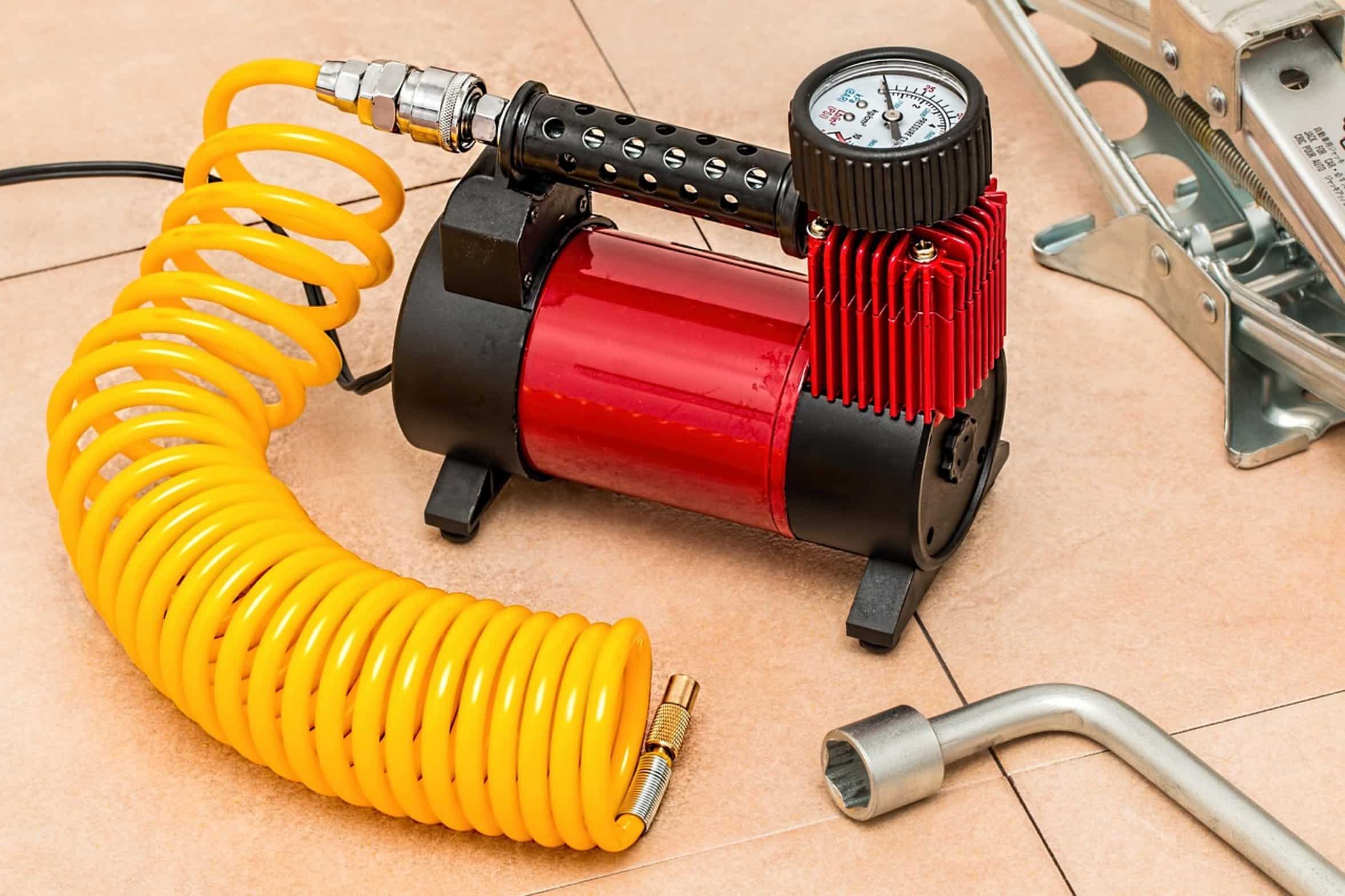
Quality of build is important. While in operation the pump head will get warm.
Plastic housings (of low quality) will eventually warp. That cause air to leak and the seals to fail. High-grade reinforced plastics or metal bodies will outlast their lesser versions and will shed heat better.
Hose material is another consideration. A short, weak hose makes it hard to reach the back tire. Braided longer hose allows you more flexibility.
It’s a small comfort but can save your frustration as you kneel on asphalt.
Digital Gauges and Automatic Shutoff Features
Just about all have gone digital these days. That’s not necessarily a bad thing.
For one thing, analog dial gauges tend to get broken or start drifting. Digital readout provide an exact reading. And they offer preset pressure options.
Set your desired PSI and let it run until the unit turns itself off. You won’t have to worry about over-inflating. Not only is that convenient but it’s a safety feature too.
The downside is digital gauges can be difficult to see in direct sunlight. Matte finishes solve this problem.
Cord Length and Design for Convenience
One overlooked item is cord length.
Six feet sounds like plenty of cord, right? Not so much if it’s in your passenger side plug and you want to get to the rear driver-side tire. At minimum, look for at least an eight foot cord.
Several come with a coiling design that extends. It stay in a neat coil until you need more length, then it can extend as needed. The last thing you need on the side of the road in an emergency is a snarl.
Top Brands and Price Points
But just because it’s cheap doesn’t mean it will work. There are some good solid units out there, you don’t necessarily have to break the bank. Check out Dewalt, Milwaukee and other name brand tool.
They make sturdy unit built to withstand the abuse. The VIAIR and ARB portable models has been around forever and have proven themselves in the off road world. They’re pricey but bulletproof.
For someone who just takes them out now and then, something more mid range from Shop-Vac or Black+Decker should of be fine. Look at reviews that specifically discuss longevity.
Maintenance and Storage Tips
Don’t store it in your garage, stash it in your vehicle.
Electrical component can break down with exposure to moisture and dust. Store it in its own pouch to keep it clean and accessible. Once per year, test it out.
If it has a battery, check that battery (if it’s rechargeable). Check the seal of the hose adapter. A little preventive care goes a long way toward making sure it’ll be there for you on the road.
It’s annoying to have a flat tire. Having a broken tool makes it worse. Choose one that fits your habits and your car.
Don’t sacrifice build quality in the name of saving money. A good inflator instills confidence at every fill up. It turns what could be a disaster into just a minor inconvenience.
When the needle begin its climb, you’ll thank yourself.