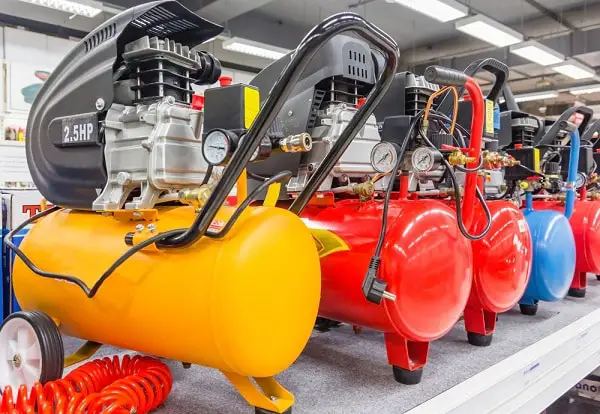
A plasma cutter makes you think it’s magic; no smoky oxy-fuel cut, no expensive TIG filler. Then you turn it on and listen as compressor strains to catch up…that familiar whine. Most of the time, the problem isn’t with the cutter itself but just the air supply failing to provide enough to run machine.
That’s an air quality problem. The spec sheets includes what CFM your machine require. But they hardly ever describe it with context.
That means if you take a 40-amp Hypertherm Powermax 45 and plug it into inexpensive 6-gallon pancake compressor, all bets are off. You’re asking for a disaster. Youll notice the arc stuttering.
You’ll have a raggedy cut. And you’ll blow through electrodes long before workday ends. Knowing how much air flow your tools require is difference between being a pro and just a hobbyist.
It’s the difference between having a solid asset in your shop versus something that makes you want to pull your hair out.
How to Calculate Plasma Cutter Air Needs
The CFM Myth and Air Quality
Most shops gets eaten up by this: the gap between required CFM and rated CFM. Common mistakes with plasma cutting air supply First off, manufacturers measures airflow in a specific way.
Understanding SCFM vs FCFM
It’s typically referred to as standard cubic feet per minute, or SCFM, meaning they’re measuring amount of air at sea level under perfect conditions. Your garage isn’t at sea level. It’s not perfect.
What you have going on is called free cubic feet per minute, or FCFM, which take into account actuality conditions in your garage, such as temperature and pressure. Here’s why this difference is important: As the air move through hoses, it thins out. Because of friction it loses pressure.
In other words, number on the box is frequently a best case scenario that never occur in reality.
Compressor Duty Cycle and Tank Size
Most users don’t pay attention to duty cycle on their compressor. That little tank may refill in a hurry but will not support flow.
A 30-gallon compressor can hits high peak CFM for short bursts. But it’s not going to provide that flow over a long kerf. Plasma cutting call for constant uninterrupted pressure.
When the tank empty before the pump refills, you lose pressure. Your arc become weakened. You get dross on bottom of your cut.
Get a compressor that provides constant flow, not a quick burst.
Air Hose Size and Friction Loss
The second factor, which is a silent performer, is size of your hose. You can have all the horsepower you want but if it are going through a narrow hose, you are creating a bottleneck that starve your torch.
No matter how hard the compressor pushes air through the hose its volume will be restricted by the material. For instance, many people makes the mistake of using a 1/4-inch hose on a high-amperage machine. Use a hose that is at least 3/8 inch or even larger to reduce friction loss.
This allows air to get to the torch with enough force to keep a stable plasma jet.
Filter Maintenance and Moisture Control
The forgotten variable is filter maintenance. Plasma arcs hates moisture in the air line.
Any water in the torch causes an instant fail or potentially hazardous electrical short. Compressor filters is designed to capture both water and oil. Over time they will becomes clogged and restrict flow.
Nobody notices until it’s too late. You may be running a powerful compressor with a filthy filter that chokes the system. Regularly inspect inline regulator filters and clean them.
Quality air is just as vital than high-pressure air.
Determining Correct Air Flow Requirements
What’s that figure you need then? The answer: it varies by amperage.
Typically, you need 3-5 CFM for a 30-amp cutting unit and 6-8 CFM at 70 PSI for a 40-amp machine. Always add a buffer. Let’s say the spec calls for 4 CFM.
Plan on getting 5 or 6 from your source. Why? It is for altitude, for any restriction in your filters and hoses, and for a buffer for your consumable protection.
You want to be running rich-not lean. Rich air provide cleaner cuts. Choosing a good compressor helps you get better cuts.
Don’t scrimp. Buy based off your application rather than just on the power plug. If you match the machine to the air supply, you’ll get smooth cuts that feel like magic.
The cut is smooth. It doesn’t fight back. Most times it means difference between a nice finish and a nasty one.
You should of chose a better compressor.